Plant profile
Florida Beauty philodendron
Philodendron 'Florida Beauty'
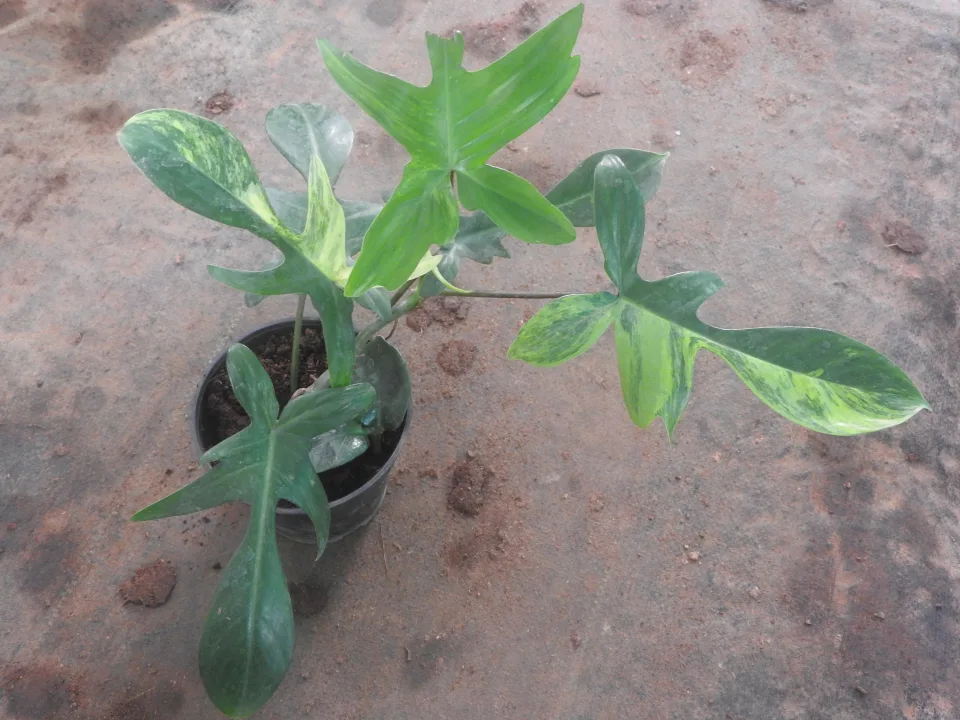
Photo : Yercaud-elango — CC BY 4.0 — source

🌱 Growing conditions
☀️ Light
Very bright indirect light; essential to maintain good variegation
💧 Watering
Water when the top 3 to 5 cm of mix are dry
🌡️ Temperature
18 to 28 °C
💦 Humidity
Medium to high
🪴 Potting mix
Very airy, chunky and well-draining
⭐ Difficulty
Moderate
🌱 Growth
Moderate
📏 Mature size
1 to 2 m on a support long
🌿 Habit
climbing
📝 About Florida Beauty philodendron
Description
Philodendron ‘Florida Beauty’ is a climbing philodendron with deeply lobed leaves marked by highly variable yellow-cream to off-white sectors. Some leaves may show little variegation, while others can be nearly half cream-white.
The variegation is unstable: a stem can produce more green tissue or, conversely, too much pale tissue. Very white leaves are striking but contain less chlorophyll and therefore need very bright indirect light without scorching sun.
The plant performs best when it climbs a support, which encourages larger and more deeply cut leaves.
Care
Place it in very bright filtered light. Low light slows growth and can encourage greener leaves.
Water when the top few centimeters of mix are dry. Use a chunky medium that holds enough moisture without becoming compact.
Guide the main stem up a support. If several nodes revert fully green, pruning back to a still-variegated section may help restore the pattern.
Avoid heavy feeding: rapid growth does not improve variegation and can increase salt buildup.
Repotting
Repot when roots fill the container. A slightly larger pot with drainage holes and a very airy aroid mix are essential.
Use repotting time to install or reinforce the support because the stems become harder to handle later.
Propagation
Take stem cuttings containing at least one node. To preserve variegation, choose a section where the stem shows both green and pale tissue.
A nearly all-white node may produce a shoot that cannot sustain itself long term; an all-green node may produce a reverted plant.
🐱 Toxicity
Toxic if swallowed because of calcium oxalate crystals.
🩺 Common problems
Yellow leaves
Overwatering is common when yellow leaves are soft and the pot dries slowly. A highly variegated leaf can also age faster than a greener leaf.
If new growth is weak and small, check both light and roots.
Brown leaves
White or cream areas brown more easily after drought, direct sun or salt buildup. A slight brown margin on a large white sector is not always a serious problem.
Soft spots together with wet soil do require a root check.
Diseases
Root rot in saturated mix; bacterial leaf spotting can occur in high humidity with poor air circulation.
Pests
Thrips are particularly important to watch for on new leaves; mealybugs and spider mites can also occur.