Plant profile
Glorious philodendron
Philodendron gloriosum
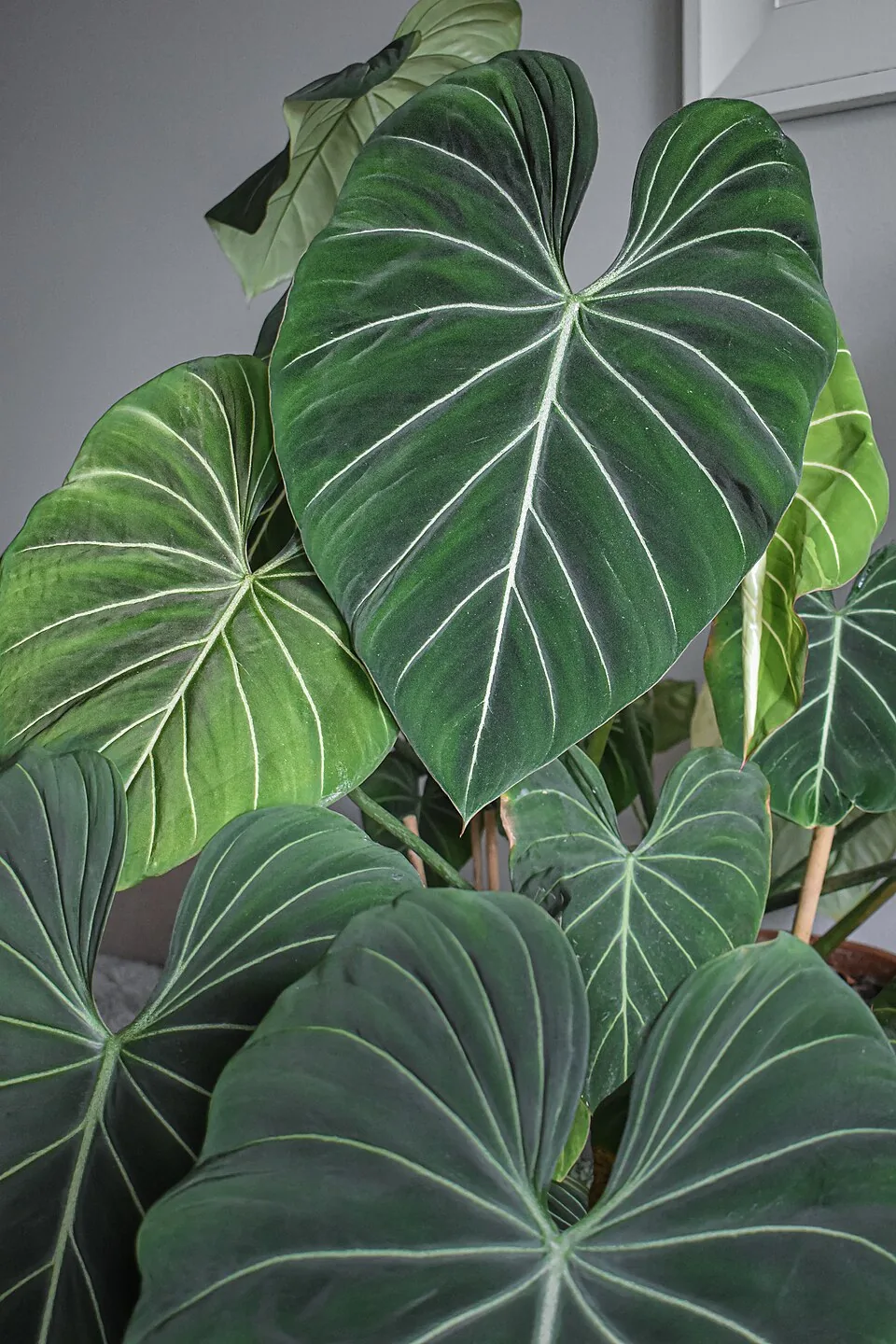
Photo : Myplantcollection_ — CC BY-SA 4.0 — source

🌱 Growing conditions
☀️ Light
Bright indirect light; protect from scorching sun.
💧 Watering
Water when the first few centimeters of potting mix begin to dry, without leaving standing water.
🌡️ Temperature
18 to 27 °C
💦 Humidity
Medium to high
🪴 Potting mix
Rich, airy and well-draining.
⭐ Difficulty
Moderate
🌱 Growth
Moderate to fast
📏 Mature size
30 to 60 cm high, with a creeping rhizome that can exceed 1 m
🌿 Habit
creeping
📝 About Glorious philodendron
Description
Philodendron gloriosum is a terrestrial, crawling Philodendron rather than a climbing vine. Its rhizome travels horizontally along the surface and carries large velvety heart-shaped leaves with pale veins. A long pot or trough suits it better than a deep container because the growing rhizome continually needs space ahead of it.
Care
Bright indirect light; protect from scorching sun. Water when the first few centimeters of potting mix begin to dry, without leaving standing water. Above all, avoid abrupt changes in conditions and check the root ball before watering again.
Watch the rhizome tip; when it reaches the pot edge, repot or extend the growing space rather than forcing the rhizome to dive downward or bend.
Repotting
Repot when the roots truly fill the container or the potting mix has degraded. Choose a pot with drainage holes only slightly larger and use a rich, airy, well-draining mix. An unnecessarily large pot keeps moisture around the roots for longer.
For Philodendron gloriosum, use a long, fairly shallow container and position the active rhizome tip with open space in front of it; do not automatically centre the plant in the pot.
Propagation
Take a stem section containing at least one viable node; it can root in water or in a light, airy medium.
Divide Philodendron gloriosum by cutting the rhizome between nodes only if each section retains at least one viable growth point and roots; a piece with no bud will not grow.
🐱 Toxicity
Toxic to dogs and cats if chewed or ingested. Philodendrons contain insoluble calcium oxalate crystals that can strongly irritate the mouth and digestive tract.
🩺 Common problems
Yellow leaves
Several yellow leaves on Philodendron gloriosum should first prompt you to check whether the potting mix stays wet too long. Also check the light: a plant in low light uses less water and becomes more sensitive to overwatering.
Brown leaves
Brown edges on Philodendron gloriosum may follow dry air, irregular watering or salt buildup. A dry patch on the window side points instead to overly intense direct sun.
Diseases
Root rot is the most serious problem when Philodendron gloriosum remains in a compact, wet mix. A soft base or unusual smell justifies checking the roots and removing damaged tissue.
Pests
On Philodendron gloriosum, inspect young leaves and their undersides in particular: thrips, spider mites and scale insects can settle there. Deformed or marked new growth is a useful warning sign.