Plant profile
Philodendron Lemon Lime
Philodendron hederaceum 'Lemon Lime'
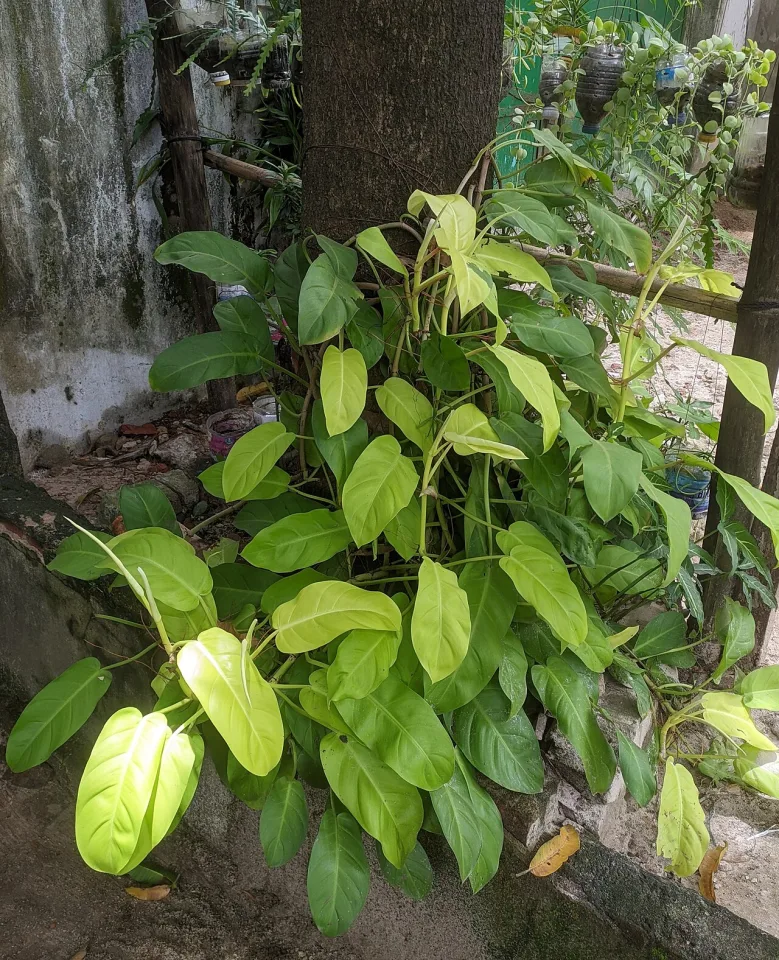
Photo : AlbeitPK — CC BY-SA 4.0 — source

🌱 Growing conditions
☀️ Light
Bright indirect light; protect pale sectors from strong midday sun.
💧 Watering
Water when the top 3–5 cm are dry, then drain thoroughly.
🌡️ Temperature
18–28 °C; avoid prolonged temperatures below 16 °C.
💦 Humidity
Medium to high, ideally 50–70 %, with airflow.
🪴 Potting mix
Very airy aroid mix with bark, perlite or pumice and light organic matter.
⭐ Difficulty
Moderate
🌱 Growth
Moderate
📏 Mature size
1–2 m with support
🌿 Habit
Climbing
📝 About Philodendron Lemon Lime
Description
Philodendron hederaceum 'Lemon Lime' is a heartleaf form whose young shoots emerge in lemon-yellow to chartreuse tones. As the leaves mature they generally become greener while retaining a characteristically bright appearance.
Like ordinary Philodendron hederaceum, it grows quickly and adapts equally well to trailing or climbing culture. With a support and enough light, its leaves can become noticeably larger.
It is more forgiving than many highly variegated Philodendrons and is a good choice for bright foliage without the extra demands of white-variegated cultivars.
Care
Place it in medium to bright indirect light. Too little light produces longer internodes and smaller leaves; sudden direct sun can bleach and then burn the lemon-colored foliage.
Water when the top of the mix is dry and always let the pot drain. Pinch the stems if you want to keep a bushy habit, or let them climb to obtain larger leaves.
A light fertilizer application during the warmer growing season supports its naturally fast growth.
Repotting
Repot when the roots occupy the pot, using a container only slightly larger with a well-aerated mix.
Propagation
Very easy from stem cuttings with at least one node, either in water or directly in a light potting mix.
🐱 Toxicity
Toxic if ingested because the tissues contain irritating calcium oxalate crystals.
🩺 Common problems
Yellow leaves
Excess water is the most common cause. A sudden drop in light or an old leaf can also explain isolated yellowing.
Brown leaves
Dry edges after prolonged lack of water, very dry air or excess salts; bleached areas that later turn brown indicate overly strong sun.
Diseases
Root rot in saturated potting mix. If several leaves yellow at once or the stem base softens, remove the root ball, cut away brown mushy roots and repot into a more aerated mix before watering again.
Pests
Thrips, spider mites and scale insects.