Plant profile
Flask philodendron
Philodendron martianum
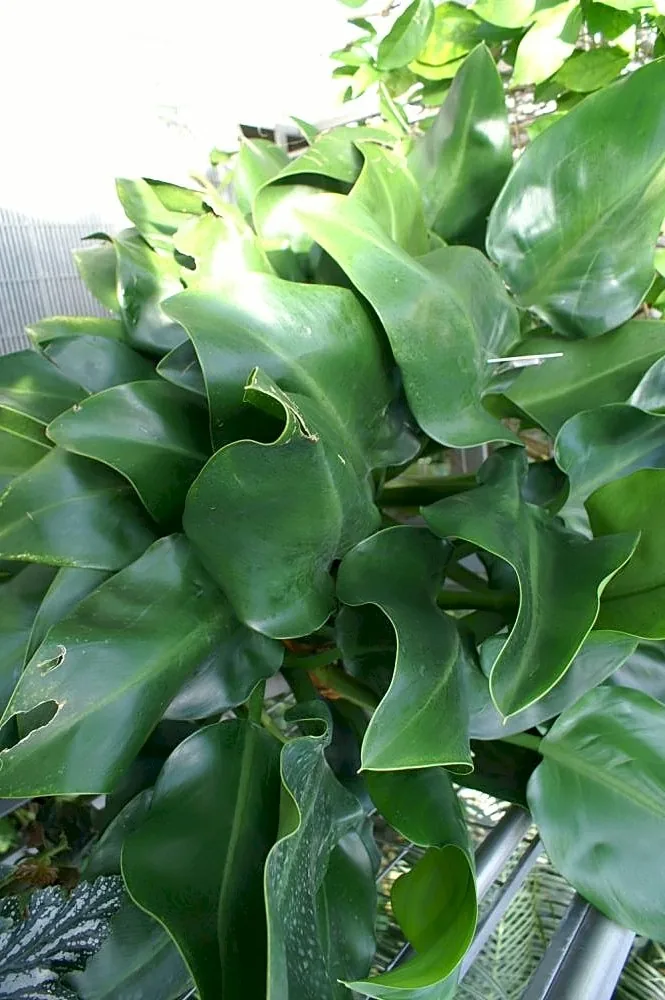
Photo : Photo by David J. Stang — CC BY-SA 4.0 — source

🌱 Growing conditions
☀️ Light
Bright to medium indirect light; gentle morning sun can be tolerated after acclimation.
💧 Watering
Water when the top few centimeters of the potting mix dry, then allow excess water to drain.
🌡️ Temperature
18 to 28 °C
💦 Humidity
Medium to high
🪴 Potting mix
Airy, well-draining mix rich in organic matter.
⭐ Difficulty
Moderate
🌱 Growth
Moderate to fast
📏 Mature size
60 to 100 cm
🌿 Habit
self-heading rosette
📝 About Flask philodendron
Description
Philodendron martianum forms a compact rosette of large glossy leaves on very thick, swollen petioles that partly store water. It is self-supporting rather than truly climbing. This fleshy structure explains why it tolerates slight drying better than thin-stemmed Philodendrons kept constantly wet.
Care
Let the surface dry slightly between waterings. Its thick petioles store water, so avoid overly frequent watering and choose a very well-drained mix.
Repotting
Repot when roots truly fill the container or the potting mix has degraded. Choose a pot with drainage holes only slightly larger and use an airy, well-draining mix rich in organic matter. An unnecessarily large pot retains moisture around the roots for longer.
Philodendron martianum has swollen petioles and a compact habit; choose a stable but snug pot and do not plant it deeper simply to keep the rosette upright.
Propagation
Propagate mainly by separating basal shoots or by stem sections that contain a viable node. Keep divisions warm and only lightly moist until roots resume growth.
Dividing an established basal offset is safer than attempting a leaf cutting; each division must retain a growth point and part of its own root system.
🐱 Toxicity
Contains or may contain irritating calcium oxalate crystals; keep out of reach of children and animals.
🩺 Common problems
Yellow leaves
Several yellow leaves on Philodendron martianum should first prompt a check that the potting mix is not staying wet for too long. Also check light: a plant in low light uses less water and becomes more sensitive to overwatering.
Brown leaves
Brown edges on Philodendron martianum can follow dry air, irregular watering or salt buildup. A dry patch on the window side suggests overly intense direct sun.
Diseases
Root rot is the most serious problem when Philodendron martianum remains in a compact, wet mix. A soft base or abnormal smell warrants checking the roots and removing degraded tissue.
Pests
On Philodendron martianum, inspect young leaves and their undersides especially: thrips, spider mites and scale insects can settle there. Deformed or marked new growth is a useful warning sign.