Plant profile
Black-gold philodendron
Philodendron melanochrysum
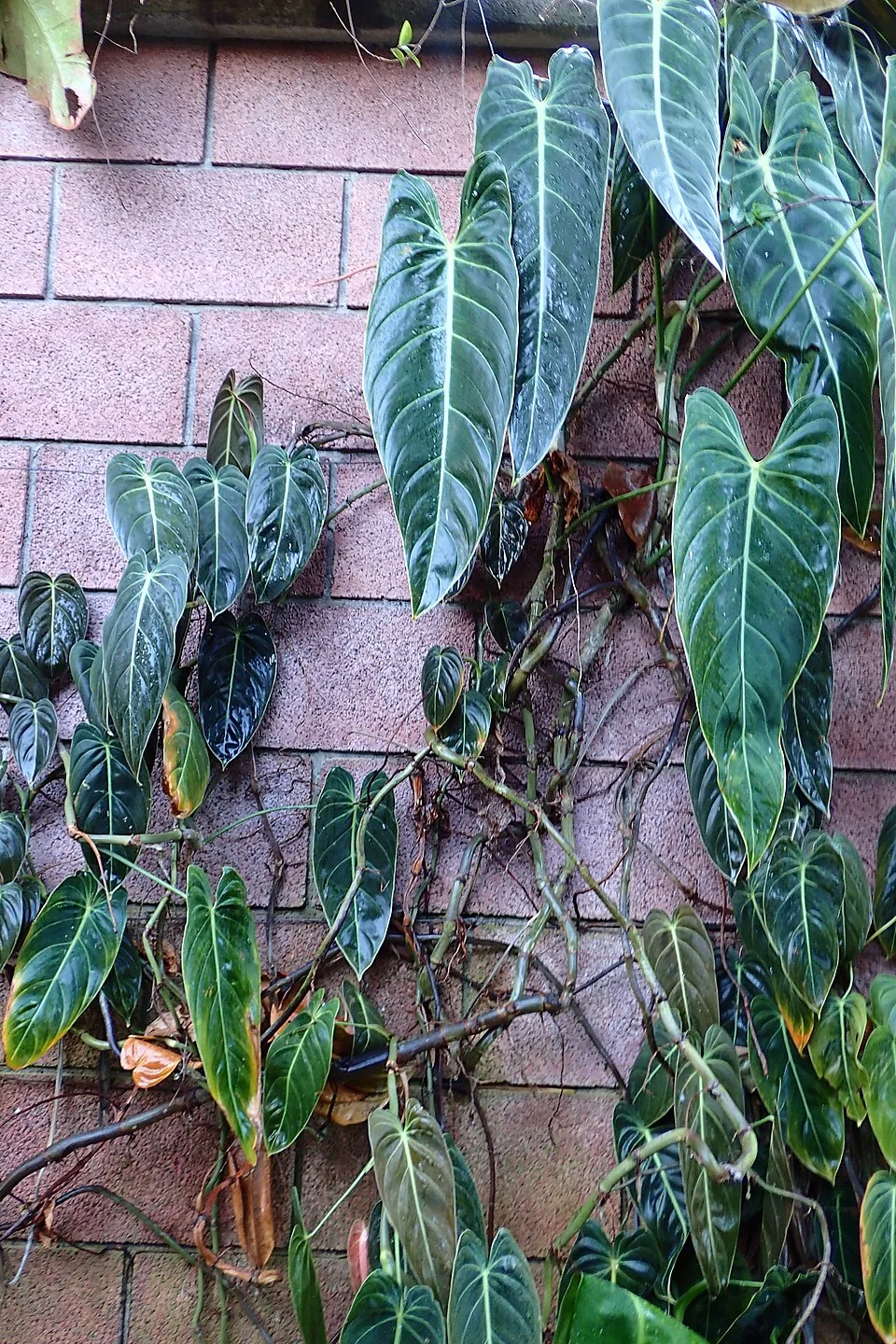
Photo : Krzysztof Ziarnek, Kenraiz — CC BY-SA 4.0
🌱 Growing conditions
☀️ Light
Bright, consistent indirect light.
💧 Watering
Water when the top few centimeters of the potting mix dry, then allow excess water to drain.
🌡️ Temperature
18 to 28 °C
💦 Humidity
Medium to high
🪴 Potting mix
Airy, well-draining mix rich in organic matter.
⭐ Difficulty
Moderate
🌱 Growth
Moderate to fast
📏 Mature size
1.5 to 3 m or more with support
🌿 Habit
climbing
📝 About Black-gold philodendron
Description
Philodendron melanochrysum is a vine prized for long velvety leaves that are very dark green to nearly black, crossed by paler veins. Juvenile leaves are much smaller than those of a mature plant climbing a support. Stable vertical growth is therefore essential for producing the largest, best-proportioned blades.
Care
Provide a moss pole or vertical support to encourage large leaves. Maintain warmth and high humidity, with an airy mix kept lightly moist but never saturated.
Repotting
Repot when roots truly fill the container or the potting mix has degraded. Choose a pot with drainage holes only slightly larger and use an airy, well-draining mix rich in organic matter. An unnecessarily large pot retains moisture around the roots for longer.
Install the support for Philodendron melanochrysum during repotting before closing up the pot, and position the nodes near it so aerial roots can attach.
Propagation
Propagate from stem cuttings with at least one node and growth point. Aerial-rooted sections establish fastest; root them in warm, humid, well-aerated conditions.
Every cutting of Philodendron melanochrysum must retain at least one node with a viable bud; a leaf with only its petiole cannot regenerate a complete vine.
🐱 Toxicity
Contains or may contain irritating calcium oxalate crystals; keep out of reach of children and animals.
🩺 Common problems
Yellow leaves
Several yellow leaves on Philodendron melanochrysum should first prompt a check that the potting mix is not staying wet for too long. Also check light: a plant in low light uses less water and becomes more sensitive to overwatering.
Brown leaves
Brown edges on Philodendron melanochrysum can follow dry air, irregular watering or salt buildup. A dry patch on the window side suggests overly intense direct sun.
Diseases
Root rot is the most serious problem when Philodendron melanochrysum remains in a compact, wet mix. A soft base or abnormal smell warrants checking the roots and removing degraded tissue.
Pests
On Philodendron melanochrysum, inspect young leaves and their undersides especially: thrips, spider mites and scale insects can settle there. Deformed or marked new growth is a useful warning sign.