Plant profile
Velvet-leaf philodendron
Philodendron hederaceum 'Micans'
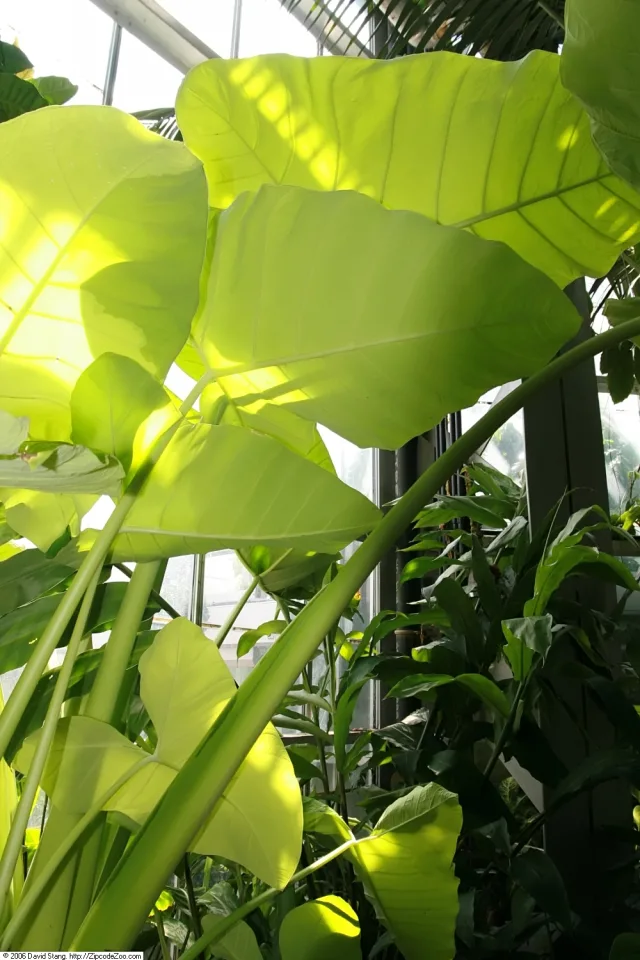
Photo : Photo by David J. Stang — CC BY-SA 4.0 — source

🌱 Growing conditions
☀️ Light
Bright indirect light; tolerates medium light
💧 Watering
Allow the top of the mix to dry slightly before watering
🌡️ Temperature
18 to 28 °C
💦 Humidity
Medium to high
🪴 Potting mix
Airy, humus-rich and well-draining
⭐ Difficulty
Easy
🌱 Growth
Fast
📏 Mature size
1 to 3 m long
🌿 Habit
climbing or trailing
📝 About Velvet-leaf philodendron
Description
Philodendron ‘Micans’ is grown for its velvety heart-shaped leaves. Their color shifts with the angle of the light: bronze-green, copper or burgundy on young leaves, then deep green, with undersides that are often purplish.
The velvety surface makes the plant highly decorative but also more prone to water marks and rubbing damage than a standard Philodendron hederaceum. Repeatedly misting the leaves directly is therefore best avoided.
The plant can trail, but it develops larger leaves when allowed to climb a support.
Care
Give it bright filtered light for compact growth and good color. Low light stretches the stems and reduces leaf size.
Water when the top of the pot has begun to dry, without keeping the mix waterlogged. A chunky medium that allows air around the roots is preferable.
Avoid rubbing the velvety leaves. Dust them with a very soft brush, or use a light shower followed by quick drying in a well-ventilated place.
Prune overly long stems just above a node to encourage new branches.
Repotting
Repot when the roots occupy the container well. An aroid mix containing bark, perlite or pumice, coir and potting soil works very well.
If adding a pole, install it during repotting to avoid damaging roots later.
Propagation
Take stem cuttings with at least one node. Sections can root in water, sphagnum moss or an airy mix.
Cuttings carrying two or three nodes generally establish faster than a minimal one-node section. Keep them warm without saturating the rooting medium.
🐱 Toxicity
Toxic if swallowed because of calcium oxalate crystals.
🩺 Common problems
Yellow leaves
General yellowing often comes from overwatering or from a mix that has become too compact. Lower leaves can also yellow naturally with age.
A plant in low light uses less water, so reduce watering frequency rather than following a calendar.
Brown leaves
Dry tips may indicate low humidity or irregular watering. Strong direct sun can bleach and then scorch the velvety foliage.
Black, soft marks on leaves that have remained wet for a long time may be damaged tissue or a secondary infection.
Diseases
Root rot especially in heavy, constantly wet mix; leaf spots can develop when foliage remains wet without ventilation.
Pests
Thrips, spider mites and mealybugs; inspect the undersides of the velvety leaves carefully.