Plant profile
Moonlight philodendron
Philodendron 'Moonlight'
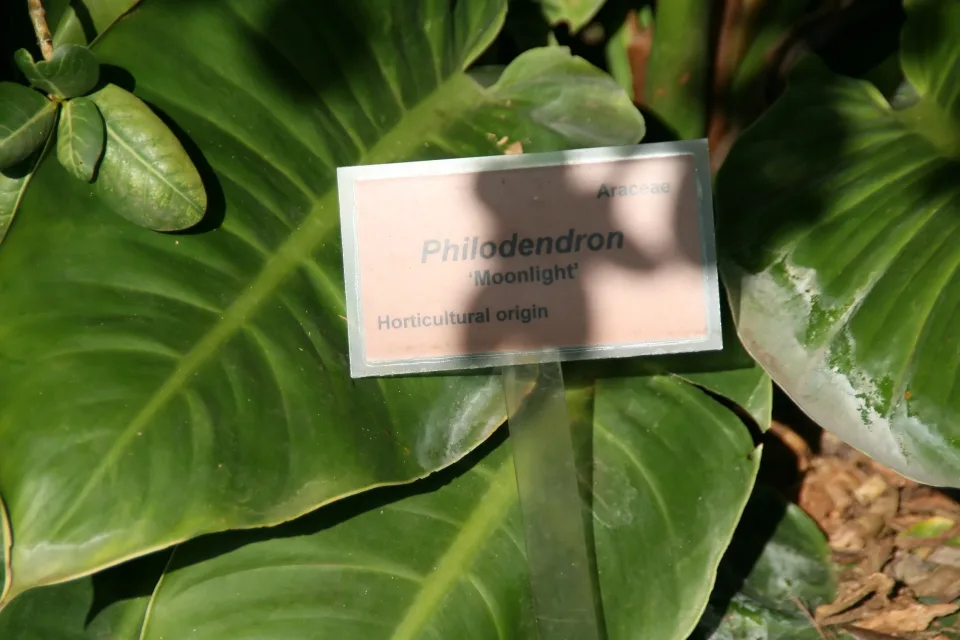
Photo : Photo by David J. Stang — CC BY-SA 4.0 — source

🌱 Growing conditions
☀️ Light
Bright indirect light to keep young leaves luminous yellow-green
💧 Watering
Water when the top 3 cm of mix are dry
🌡️ Temperature
18 to 28 °C
💦 Humidity
Medium to high
🪴 Potting mix
Airy and well-draining aroid mix
⭐ Difficulty
Easy to moderate
🌱 Growth
Moderate
📏 Mature size
50 to 80 cm
🌿 Habit
compact, self-heading rosette
📝 About Moonlight philodendron
Description
Philodendron ‘Moonlight’ is a self-heading hybrid that does not produce long vines like climbing philodendrons. New leaves emerge lemon-yellow to chartreuse and gradually turn light green as they age.
Its rosette habit makes it suitable for furniture, tables or the floor as the plant becomes larger. Light plays an important role in color: too little light gives greener leaves and a more open habit.
The plant performs best with well-aerated roots and suffers when the base of the rosette remains continuously wet.
Care
Place ‘Moonlight’ in bright filtered light. Avoid strong midday sun directly on very pale young leaves, which can mark quickly.
Water when the top of the mix has dried, then allow excess water to drain. Do not regularly pour water into the center of the rosette, especially in cool, poorly ventilated conditions.
Remove old leaves at the base of the petiole once they are fully yellow. A weak balanced fertilizer every 4 to 6 weeks during active growth is sufficient.
Repotting
Repot when roots fill the container or the mix has compacted. Choose a pot with drainage holes that is only slightly wider, never one that is disproportionately large.
Use a chunky aroid mix. Keep the base of the plant at the same level: burying it too deeply increases the risk of crown rot.
Propagation
Propagation is more difficult than with a climbing philodendron because the plant does not produce long, easily accessible nodal stems. It is mainly propagated by separating offsets when a mature plant produces them.
Each division should retain its own roots or a viable section of stem tissue. Leaf cuttings alone do not work.
🐱 Toxicity
Toxic if swallowed because of calcium oxalate crystals.
🩺 Common problems
Yellow leaves
Several yellow leaves often point to excess water, especially if the crown stays wet. A single older lower leaf can yellow naturally.
If new leaves are unusually small and very pale, also check light and nutrition.
Brown leaves
Pale new leaves scorch easily in strong direct sun. Dry margins may result from very dry air or salt buildup.
Soft brown areas near the center of the plant require a check for standing water or early rot.
Diseases
Root or crown rot with excess water; bacterial spotting can occur in warm, humid, poorly ventilated conditions.
Pests
Thrips, spider mites and scale insects; inspect especially new leaves while they are still tightly folded.