Plant profile
Painted Lady philodendron
Philodendron 'Painted Lady'
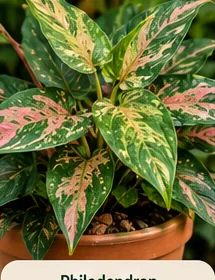
Photo : PlantMinute — Image générée
🌱 Growing conditions
☀️ Light
Bright indirect light
💧 Watering
Allow the top 3 to 5 cm of mix to dry before watering
🌡️ Temperature
18 to 28 °C
💦 Humidity
Medium to high
🪴 Potting mix
Airy, chunky and well-draining
⭐ Difficulty
Moderate
🌱 Growth
Moderate
📏 Mature size
1 to 2 m tall on a support
🌿 Habit
climbing
📝 About Painted Lady philodendron
Description
Philodendron ‘Painted Lady’ is a climbing hybrid recognized by pink-red petioles and young yellow-green leaves splashed with darker green. As the foliage ages it becomes greener while retaining a mottled appearance.
The color of new leaves is especially striking under bright light. The plant needs support to show its natural habit fully; without a pole, stems stretch outward and take up more space.
It grows steadily when the roots remain airy and watering is timed to the actual drying of the mix.
Care
Place ‘Painted Lady’ in bright filtered light. Insufficient light produces smaller, less contrasting leaves.
Water when the top few centimeters of mix are dry. A chunky substrate reduces rot risk and allows you to water the whole root ball properly.
Tie the stem gently to a support. Do not force young petioles while they are still soft.
Feed lightly in spring and summer. Wipe leaves with a soft cloth and avoid leaf-shine products.
Repotting
Repot when roots have filled the container. Use an aroid mix rich in bark, perlite or pumice and light organic matter.
Install a stable support at the same time so roots are not disturbed later.
Propagation
Take stem cuttings with at least one node. Sections can be rooted in water, sphagnum moss or an airy mix.
Tip cuttings with two or three nodes generally establish faster.
🐱 Toxicity
Toxic if swallowed because of calcium oxalate crystals.
🩺 Common problems
Yellow leaves
Overwatering, low light or damaged roots are the main causes. A single old lower leaf can yellow naturally.
Brown leaves
Dry tips can come from low humidity or irregular watering. Young yellow leaves are more sensitive to strong direct sun.
Diseases
Root rot is the main risk in overly wet mix. If several leaves yellow while the root ball stays wet, check for brown mushy roots, remove damaged tissue and repot into a more aerated mix. Leaf spots can also occur when foliage remains wet with poor airflow.
Pests
Watch especially for thrips, spider mites and mealybugs. Inspect new leaves and their undersides; isolate the plant quickly if fresh growth becomes distorted, stippled or silvery.