Plant profile
Philodendron Paraiso Verde
Philodendron 'Paraiso Verde'
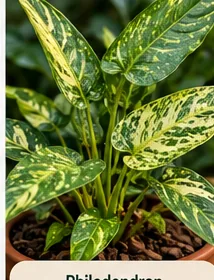
Photo : PlantMinute — Image générée
🌱 Growing conditions
☀️ Light
Very bright indirect light.
💧 Watering
Water when the top 3–5 cm of mix are dry, then soak thoroughly and let excess water drain. Do not leave the pot standing in water.
🌡️ Temperature
20 to 29 °C
💦 Humidity
Medium to high
🪴 Potting mix
Very airy and free-draining.
⭐ Difficulty
Moderate
🌱 Growth
Moderate
📏 Mature size
1 to 2 m on a support
🌿 Habit
climbing
📝 About Philodendron Paraiso Verde
Description
Philodendron ‘Paraiso Verde’ is prized for its long leaves variegated in light green, dark green and yellow-green. The pattern varies greatly from one leaf to another and is strongly influenced by both temperature and light.
With this cultivar, a room that is too cool can produce much greener leaves even when the light is good. Warm conditions generally favour the pattern more strongly.
The plant climbs naturally and increases markedly in size when given a support.
Care
Keep it in very bright filtered light and in a warm room. Do not judge the variegation from only one or two leaves after a seasonal change: temperature plays an important role.
Water when the top few centimetres are dry, then let the pot drain. Use a very airy mix.
Train the plant up a support for larger leaves. Feed lightly during active growth.
Repotting
Repot when the roots fill the pot well. Choose a pot only slightly larger. A coarse aroid mix with bark, perlite or pumice and light organic matter is ideal.
Propagation
Take stem cuttings with at least one node. Choose a healthy section and maintain warmth and humidity during rooting. A leaf without a node cannot produce a new plant.
🐱 Toxicity
Toxic if ingested because of calcium oxalates.
🩺 Common problems
Yellow leaves
Diffuse yellowing often indicates too much water or poorly aerated roots. An older leaf may yellow naturally.
Brown leaves
Pale areas are more sensitive to direct sun and drying. Tips may also brown in very dry air.
Diseases
Root rot is the main risk in saturated mix. If several leaves yellow together or the stem base softens, inspect the roots, remove brown mushy tissue and improve drainage. Leaf spotting is more likely when foliage stays wet with little airflow.
Pests
Watch especially for thrips, then spider mites and scale insects. Inspect new leaves, their undersides and petioles; isolate the plant if fresh growth becomes distorted or silvery.