Plant profile
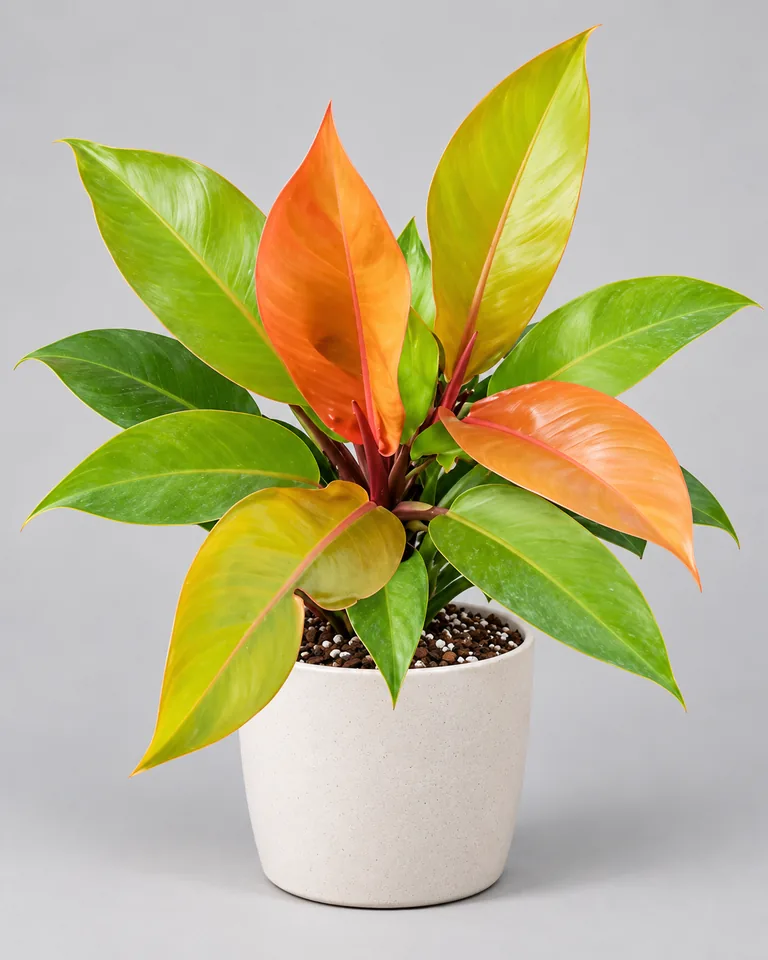
Philodendron Prince of Orange
Philodendron 'Prince of Orange'
🌱 Growing conditions
☀️ Light
Bright indirect light; avoid harsh midday sun.
💧 Watering
Allow the surface to dry slightly between waterings, then drain well.
🌡️ Temperature
18–28 °C.
💦 Humidity
Medium.
🪴 Potting mix
Airy, rich and well-drained aroid mix.
⭐ Difficulty
Easy to moderate
🌱 Growth
Moderate
📏 Mature size
60–100 cm
🌿 Habit
Compact and self-heading
📝 About Philodendron Prince of Orange
Description
Philodendron 'Prince of Orange' is a self-heading hybrid valued for the succession of colors shown by its foliage. New leaves emerge bright orange to copper, then pass through bronze and yellow-green tones before eventually becoming green as they mature.
Unlike climbing Philodendrons, it forms a compact rosette around a short central stem and normally does not need a stake or moss pole. Strong indirect light promotes clearer coloration and helps the plant maintain a dense habit.
The orange color of new leaves is therefore normal for the cultivar and should not be mistaken for a nutrient deficiency or another problem.
Care
Place it near a bright window without scorching midday sun. Low light produces longer petioles and less intense coloration.
Water when the surface begins to dry. Always allow excess water to drain from the pot and space waterings farther apart in winter.
Remove only old leaves that have become completely yellow. A diluted fertilizer during active growth is sufficient.
Repotting
Repot when the roots fill the container. Use a stable pot with drainage holes, only slightly wider than the old one, and an airy aroid mix.
Propagation
Home propagation is less straightforward than with a climbing Philodendron. Plants that develop several growth points or offsets can be divided once those sections have their own roots.
🐱 Toxicity
Toxic if ingested because the tissues contain irritating calcium oxalate crystals.
🩺 Common problems
Yellow leaves
An old outer leaf may yellow naturally. Several yellow, soft leaves more often indicate overwatering.
Brown leaves
Dry edges can result from very dry air or irregular watering. Bleached areas that later turn brown on the window-facing side suggest sun scorch.
Diseases
Root and crown rot are the main disease risks when the mix stays wet for too long. Soft dark tissue, a sour smell or persistent yellowing should prompt an immediate check of roots and drainage.
Pests
Watch for thrips, spider mites and scale insects, especially on new leaves and their undersides. Isolate the plant if new growth becomes distorted, stippled or sticky.