Plant profile
Philodendron Ring of Fire
Philodendron 'Ring of Fire'
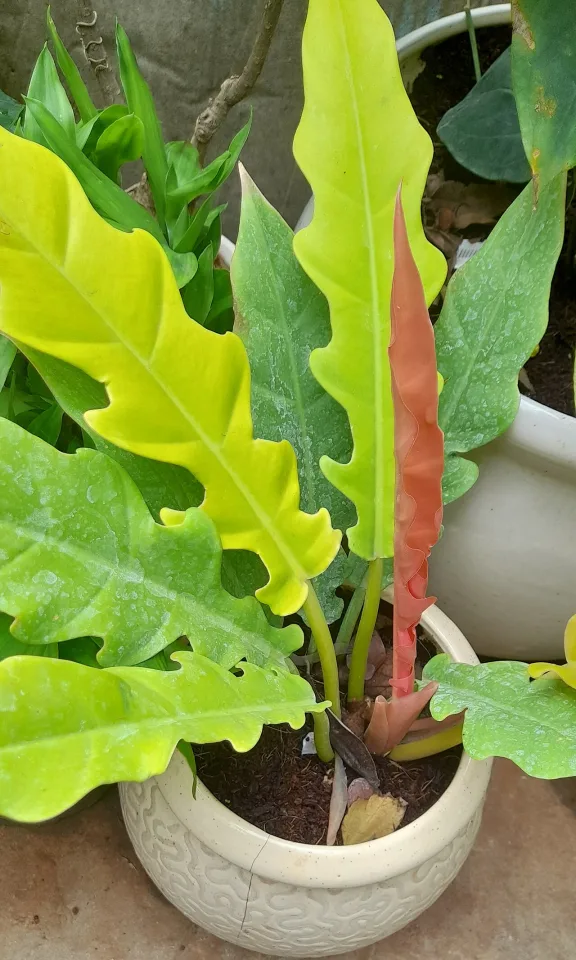
Photo : Yercaud-elango — CC BY 4.0 — source

🌱 Growing conditions
☀️ Light
Bright indirect light; protect pale sectors from strong midday sun.
💧 Watering
Water when the top 3–5 cm are dry, then drain thoroughly.
🌡️ Temperature
18–28 °C; avoid prolonged temperatures below 16 °C.
💦 Humidity
Medium to high, ideally 50–70 %, with airflow.
🪴 Potting mix
Very airy aroid mix with bark, perlite or pumice and light organic matter.
⭐ Difficulty
Moderate
🌱 Growth
Moderate
📏 Mature size
about 1–1.5 m indoors
🌿 Habit
Climbing
📝 About Philodendron Ring of Fire
Description
Philodendron 'Ring of Fire' is a striking horticultural hybrid with elongated leaves and deeply toothed margins. New leaves may combine green, cream, yellow, orange and sometimes coppery tones before the colors settle as the leaf matures.
Growth is relatively slow, making every new leaf especially noticeable. Color varies with the genetics of the active growth point, available light and the maturity of the foliage.
The plant stays more compact than many large climbing Philodendrons, but a support becomes useful as the stem lengthens and helps maintain a more upright shape.
Care
Give it bright, filtered light to support coloration without burning the pale areas. A position that is too dark reduces vigor and can make new leaves greener.
Water after the potting mix has partially dried. Use a coarse mix that drains quickly and avoid cachepots holding water. Fertilize lightly in spring and summer.
Wipe the long leaves with a damp cloth and pay particular attention to young toothed leaves, which are easy to damage while unfurling.
Repotting
Repot only when the roots fill the pot. An oversized pot greatly increases the risk of stagnant moisture for this relatively slow-growing plant.
Propagation
Take stem cuttings when several nodes are available. Every cutting must carry a viable node; rooting can be fairly slow.
🐱 Toxicity
Toxic if ingested because the tissues contain irritating calcium oxalate crystals.
🩺 Common problems
Yellow leaves
Often caused by excess water, low light or chilled roots. An old lower leaf may yellow naturally.
Brown leaves
Direct sun, overly dry air, irregular watering or salt accumulation can mark the pale areas.
Diseases
Root rot and leaf spots in warm, very humid and poorly ventilated conditions.
Pests
Watch for thrips first, then spider mites, scale insects and mealybugs. Inspect unfolding leaves and their undersides; isolate the plant if new growth becomes distorted, silvery or sticky.