Plant profile
Rojo Congo Philodendron
Philodendron 'Rojo Congo'
🌱 Growing conditions
☀️ Light
Medium to bright indirect light.
💧 Watering
Let the top 2–4 cm dry before watering.
🌡️ Temperature
18–28 °C.
💦 Humidity
Average to high.
🪴 Potting mix
Rich, airy, free-draining aroid mix with bark and perlite or pumice.
⭐ Difficulty
Easy
🌱 Growth
Moderate to fast
📏 Mature size
80 cm–1.2 m indoors
🌿 Habit
broad upright self-heading rosette
📝 About Rojo Congo Philodendron
Description
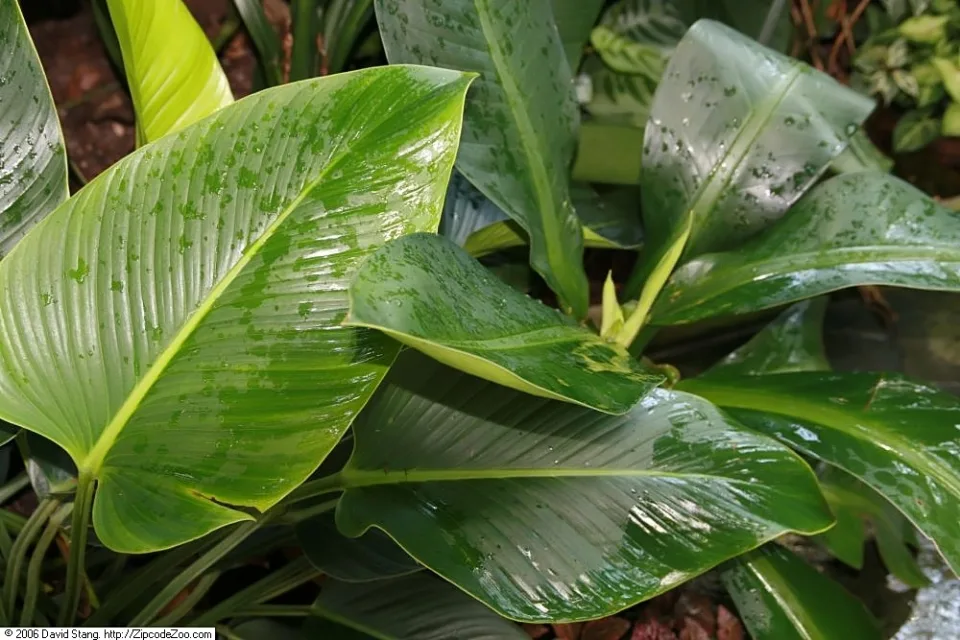
Self-heading hybrid with large thick leaves; new leaves and petioles are red to purple-brown and mature to dark green.
Unlike climbing philodendrons, it forms a rosette around a short stem and needs no pole. Good indirect light keeps the habit dense and improves colour in coloured cultivars.
Thick foliage tolerates small watering errors, but roots remain sensitive to constantly waterlogged mix.
Care
Keep in medium to bright indirect light. Water when the top few centimetres are dry and let excess drain completely.
Dust the large leaves and inspect especially new growth. Feed lightly during growth and avoid water sitting in the rosette in cool conditions.
Repotting
Repot when roots colonise the pot, moving up only one container size. Use a coarse aroid mix.
Do not bury the stem base deeply: constantly wet buried tissue can rot.
Propagation
Commercial propagation is mainly by tissue culture. At home, separate only a genuine basal shoot with its own growth point and preferably roots.
A leaf or petiole alone cannot produce a complete new Philodendron.
🐱 Toxicity
Toxic if ingested and irritating because of calcium oxalate crystals.
🩺 Common problems
Yellow leaves
Several yellow leaves with a pot that stays wet usually mean overwatering or poor aeration. One old outer leaf may yellow naturally.
Very open, weakly coloured growth can also indicate insufficient light.
Brown leaves
Dry edges: irregular watering or very dry air. Dry window-facing patches: strong direct sun. Soft areas near the centre or base: possible excess moisture.
Check mix and roots before adding more water.
Diseases
Root or stem-base rot occurs if the mix stays constantly wet. Bacterial or fungal leaf spots are favoured by frequently wet foliage.
Remove severely affected tissue and improve airflow.
Pests
Thrips, scale/mealybugs and spider mites. Thrips are especially troublesome on young leaves while still rolled, which may later open distorted or silvered.
Inspect the centre of the rosette, sheaths and new growth.