Plant profile
Pygmy date palm
Phoenix roebelenii
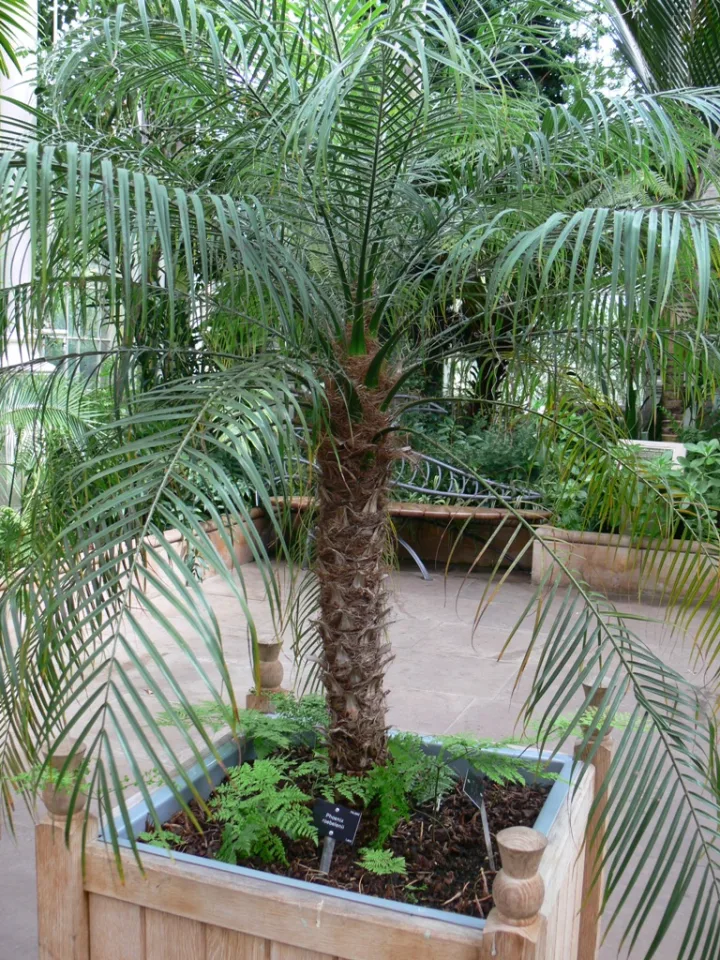
Photo : Prashanthns — CC BY-SA 3.0 — source

🌱 Growing conditions
☀️ Light
Bright light; gentle direct sun is suitable after acclimation.
💧 Watering
Water when the surface begins to dry; do not let the root ball dry out completely during active growth.
🌡️ Temperature
18–28 °C
💦 Humidity
Average to high
🪴 Potting mix
Rich and free-draining, with a good proportion of coarse material.
⭐ Difficulty
Moderate
🌱 Growth
Slow to moderate
📏 Mature size
1.5–2.5 m indoors
🌿 Habit
Upright palm
📝 About Pygmy date palm
Description
A small date palm with a slender trunk and graceful arching fronds. It needs more light than understory palms such as Rhapis or Chamaedorea, and the sharp spines at the frond bases make placement important.
This small date palm needs considerably more light than understorey palms such as Rhapis or many Chamaedorea. Its arching fronds give it a light silhouette, but the bases of older fronds carry hard spines, so its position should also take people and pets into account.
Care
Grow near a very bright window; gentle morning or late-afternoon sun is beneficial after acclimation. Water when the surface dries but avoid prolonged drought during active growth. Feed lightly with a palm fertiliser in spring and summer.
Give it a very bright position and acclimatize it gradually before exposing it to direct sun. During active growth, avoid letting the entire root ball remain completely dry for days, but always let excess water drain away. Medium to high humidity helps keep the leaflets clean, and feeding should remain light rather than excessive.
Repotting
Repot only when roots are very crowded. Use a deep stable pot with drainage holes and disturb the root ball as little as possible.
Repot only when the roots are very crowded. Use a deep, stable pot and disturb the root ball as little as possible. Keep the base of the trunk at the same level as before rather than burying it deeper.
Propagation
Mainly from seed. Fresh seed germinates best with warmth, though emergence can still take weeks or months.
Propagation is mainly by fresh seed kept warm. Germination may take several weeks or months, so this is not a rapid way to obtain a mature indoor palm.
🐱 Toxicity
Generally considered of low toxicity, but the stiff spines at the base of the fronds can cause injury.
🩺 Common problems
Yellow leaves
An old outer frond may yellow naturally. Widespread yellowing can indicate excess water, insufficient light or a nutrient deficiency.
Do not cut a frond that is still largely green: palms recover some of its nutrients before it dries completely.
Brown leaves
Dry air, drought, salt accumulation or excess fertiliser often brown the tips. Sudden strong sun can scorch whole sections of a frond.
Diseases
Root or crown rot can develop in persistently wet conditions. Avoid water stagnating around the growing point.
Pests
Spider mites, scale insects and mealybugs are the main pests. Check the underside of leaflets, the folds of the fronds and the fibrous trunk, where infestations can remain hidden.