Plant profile
Baby tears pilea
Pilea depressa
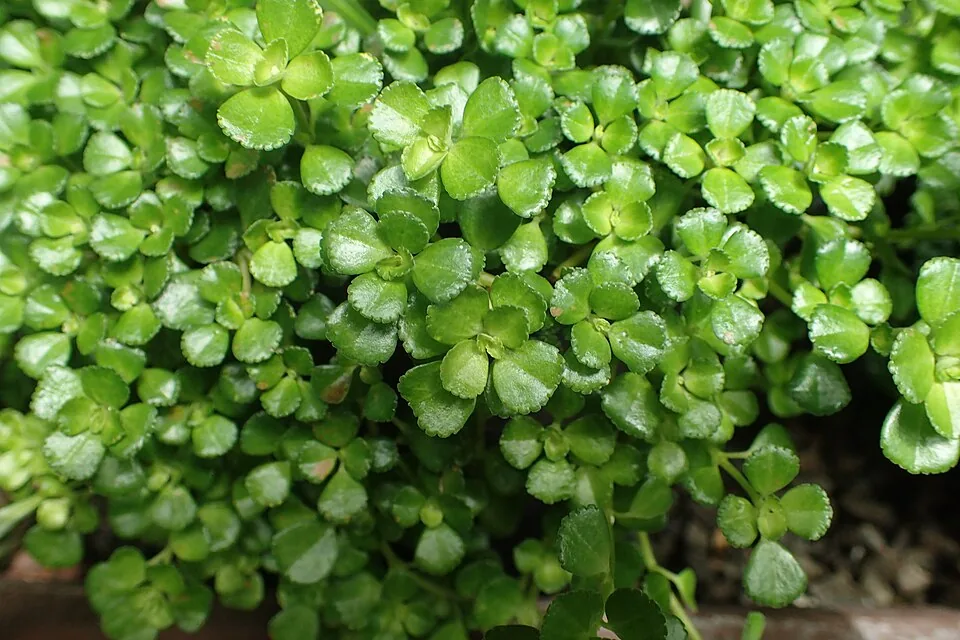
Photo : Krzysztof Ziarnek, Kenraiz — CC BY-SA 4.0 — source

🌱 Growing conditions
☀️ Light
Bright to medium indirect light. Too little light spaces the leaves and stretches the stems; hot sun can scorch the fine foliage.
💧 Watering
Water as soon as the surface dries slightly. Its fine roots dislike complete drying, but standing water quickly causes losses.
🌡️ Temperature
18 to 26 °C
💦 Humidity
High
🪴 Potting mix
Light, humus-rich and well-draining.
⭐ Difficulty
Easy
🌱 Growth
Fast
📏 Mature size
5 to 15 cm high, stems spreading or trailing 30 to 60 cm
🌿 Habit
creeping or trailing
📝 About Baby tears pilea
Description
Creeping Pilea with numerous small, round, glossy leaves. Its flexible stems readily trail from a hanging pot or cover the surface of a terrarium.
Care
Pinch the tips to create a denser mat. It works well trailing or in an open terrarium as long as air circulates and the mix does not stay waterlogged.
Repotting
Repot when the plant strongly overflows the container or the potting mix compacts, using a shallow pot with drainage holes.
Propagation
Stem cuttings: several nodes root quickly on contact with moist potting mix.
🐱 Toxicity
Generally considered non-toxic to pets.
🩺 Common problems
Yellow leaves
Often caused by excess water or insufficient light.
Brown leaves
Small dry leaves usually mean lack of water or very dry air. Dark soft stems suggest excess moisture or early rot.
Diseases
Root and stem rot if the potting mix remains waterlogged. A soft crown, blackening stems or sudden leaf drop means the roots should be checked, rotten parts removed and drainage markedly improved.
Pests
Spider mites and scale insects.