Plant profile
Friendship plant
Pilea involucrata
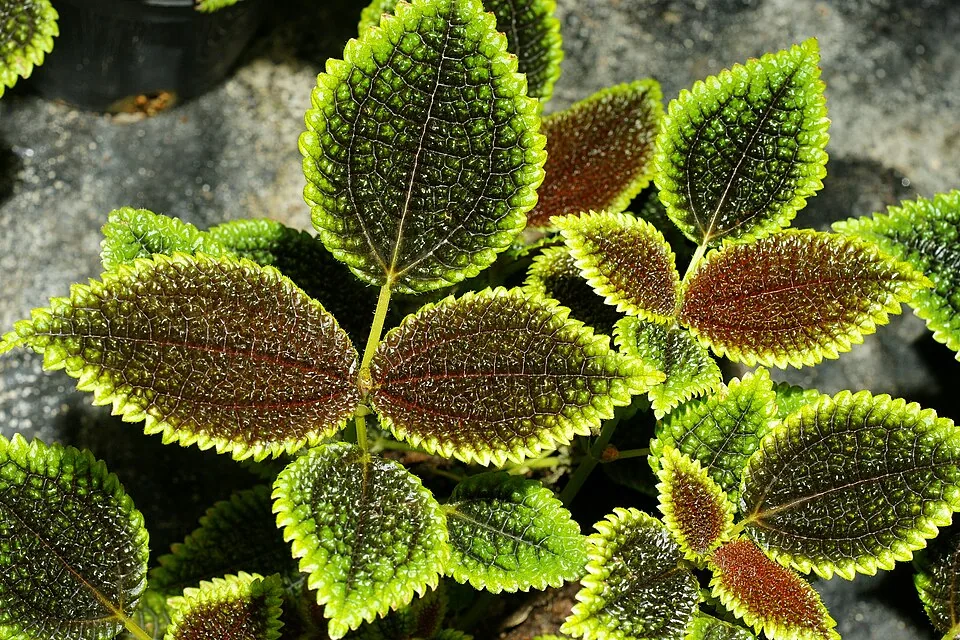
Photo : Alexander Klink — CC BY 3.0 — source

🌱 Growing conditions
☀️ Light
Bright to medium indirect light. Too much sun fades or scorches the textured leaves; too little light stretches the stems and makes the plant less compact.
💧 Watering
Water when the surface starts to dry. The root ball may stay slightly moist, but water must never stand around the roots. Reduce watering when growth slows.
🌡️ Temperature
18 to 26 °C
💦 Humidity
High
🪴 Potting mix
Use a light houseplant mix with perlite or fine pumice. Drainage should be quick while the root zone retains slight moisture.
⭐ Difficulty
Easy
🌱 Growth
Fast
📏 Mature size
20 to 30 cm
🌿 Habit
clumping
📝 About Friendship plant
Description
Compact Pilea valued for strongly textured, quilted leaves often tinged with bronze. Its small size and preference for humid air make it suitable for open terrariums or bright rooms.
Care
Pinch growing tips regularly to keep a dense clump. It likes fairly humid air, but the leaves should dry quickly after misting or watering.
Repotting
Repot into a shallow container with drainage holes when the root ball is well colonized.
Propagation
Stem cuttings or division of the clump.
🐱 Toxicity
Generally considered non-toxic to pets.
🩺 Common problems
Yellow leaves
Excess water, cold or poorly drained potting mix.
Brown leaves
Brown edges or tips usually mean dry air, a root ball left dry too long, or direct sun. Soft dark leaves point more toward excess water.
Diseases
Root rot and leaf spots in conditions that are too humid and poorly ventilated.
Pests
Spider mites and scale insects. Inspect leaf undersides and young shoots in particular; fine stippling, dull leaves or cottony clusters often reveal an infestation before it spreads.