Plant profile
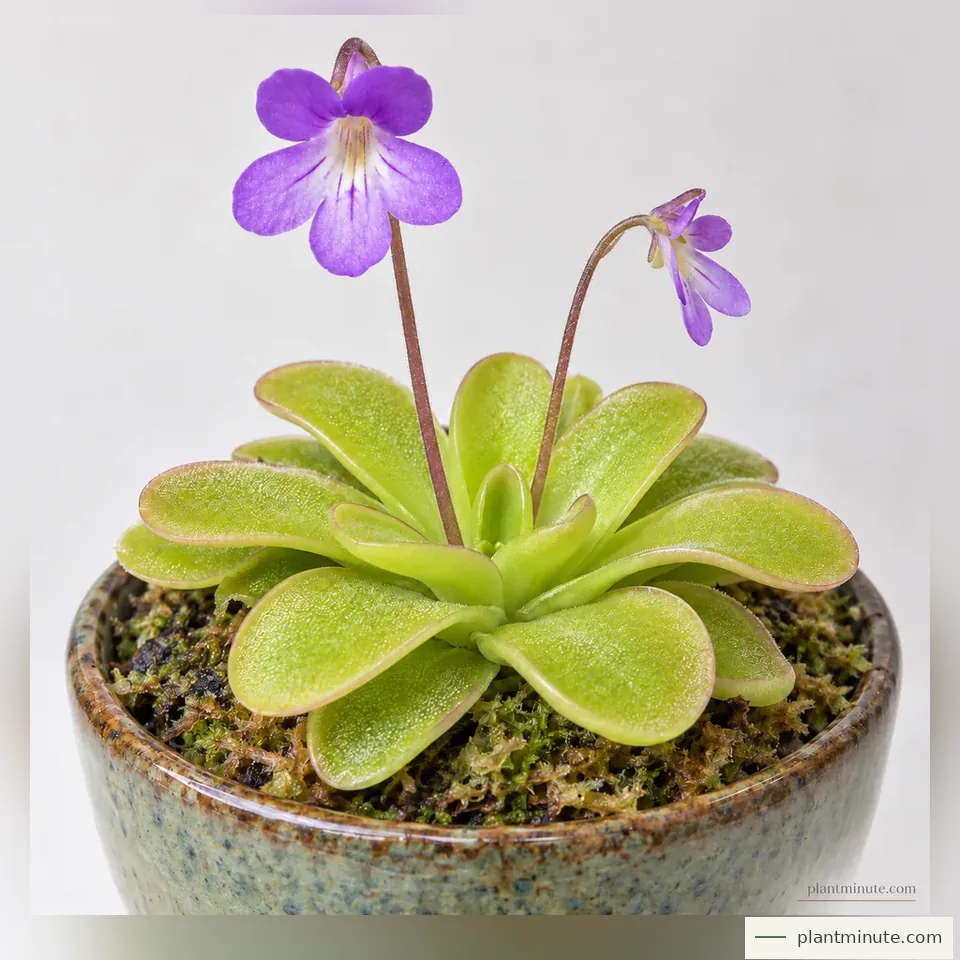
Mexican butterwort
Pinguicula moranensis
🌱 Growing conditions
☀️ Light
Bright light without prolonged scorching sun; gentle sun encourages flowering.
💧 Watering
In the carnivorous phase use low-mineral water, allowing the medium to dry slightly between waterings. When the small succulent rosette appears, reduce watering considerably and keep water out of the crown.
🌡️ Temperature
Moderate indoor temperatures; avoid frost and intense heat without airflow.
💦 Humidity
Moderate to high during growth; avoid hot, dry air.
🪴 Potting mix
Very airy, largely mineral, nutrient-poor mix suited to Mexican butterworts.
⭐ Difficulty
Moderate to demanding
🌱 Growth
Moderate, varying by season
📏 Mature size
10–25 cm across
🌿 Habit
Compact rosette
📝 About Mexican butterwort
Description
Its sticky, fleshy leaves catch tiny insects. During the dry season this Mexican butterwort may produce a smaller, less carnivorous succulent rosette; watering must change accordingly.
This butterwort can produce broad carnivorous leaves while actively growing and a tighter, less sticky rosette during relative rest. This seasonal change also alters its water needs.
Care
Do not add fertilizer to the growing medium. Drying outer leaves during the rosette change can be normal. A black, translucent center suggests excess water and rot. Reducing water during the succulent phase is essential; do not follow Drosera capensis watering rules.
Watch the shape of new leaves rather than watering to a fixed timetable. When the rosette becomes compact and less carnivorous, sharply reduce moisture; increase watering gradually as broad leaves return.
Repotting
Keep the crown above a poor, very free-draining mineral mix suitable for Mexican butterworts. Do not bury the rosette or allow water to collect in its centre.
Propagation
Lay leaf cuttings, particularly from the resting rosette, on a clean growing medium.
Leaf pullings taken at the appropriate growth stage may produce plantlets in contact with barely damp medium. Hold leaves near their base and protect cuttings from intense direct sun.
🐱 Toxicity
Do not present this carnivorous plant as edible; seek advice after a pet ingests it rather than assuming proven safety.
🩺 Common problems
Yellow leaves
Replacing broad sticky leaves with a compact rosette of thicker leaves may be a normal seasonal change, not disease. Reduce watering according to the plant's form and conditions.
Brown leaves
Soft brown leaves at the base in wet medium suggest rot. Thin, dry leaves may simply be old; inspect the rosette centre.
Diseases
The crown can rot if water stagnates during the compact winter-rosette phase. Use an airy mineral-rich mix and do not water it year-round like a Venus flytrap.
Pests
Aphids may colonise flowers; inspect flower stalks and leaf bases. Avoid oily treatments on the glandular leaves.