Plant profile
Shield aralia
Polyscias scutellaria
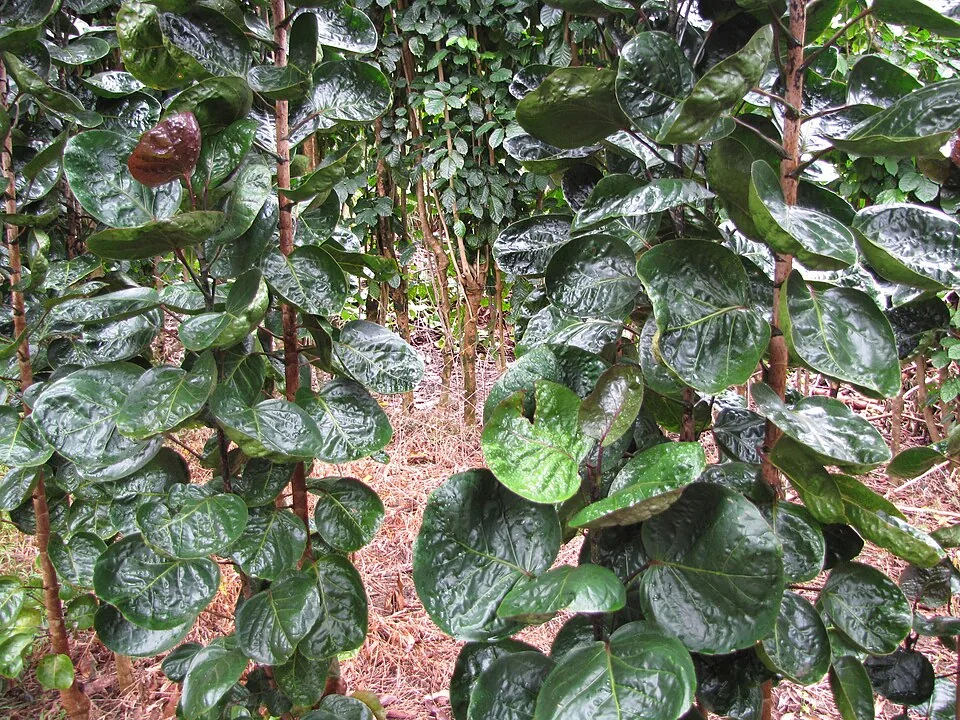
Photo : Forest and Kim Starr — CC BY 3.0 us — source

🌱 Growing conditions
☀️ Light
Bright indirect light; protect from scorching sun.
💧 Watering
Water when the first few centimeters of potting mix begin to dry, without leaving standing water.
🌡️ Temperature
18 to 27 °C
💦 Humidity
Medium to high
🪴 Potting mix
Rich, airy and well-draining.
⭐ Difficulty
Moderate
🌱 Growth
Moderate to fast
📏 Mature size
1 to 2 m indoors
🌿 Habit
shrubby
📝 About Shield aralia
Description
Polyscias scutellaria is a tropical woody shrub with dense foliage, often grown for rounded to oval, relatively thick leaves depending on the form. It tolerates pruning well and can be trained as a small branching tree. Stable light and regular but not excessive watering reduce leaf drop after stress.
Care
Bright indirect light; protect from scorching sun. Water when the first few centimeters of potting mix begin to dry, without leaving standing water. Above all, avoid abrupt changes in conditions and check the root ball before watering again.
Polyscias scutellaria tolerates formative pruning well; shorten a branch above a node in spring to encourage lower branching rather than waiting for a long bare stem.
Repotting
Repot when roots truly fill the container or the potting mix has degraded. Choose a pot with drainage holes only slightly larger and use a rich, airy, well-draining mix. An unnecessarily large pot retains moisture around the roots for longer.
An adult plant can become top-heavy; use a stable pot that is only slightly wider, because a large mass of wet compost around the roots increases the risk of leaf drop and rot.
Propagation
Stem or shoot cuttings, using a method suited to how woody the shoots are.
Stem cuttings of Polyscias scutellaria root slowly; steady warmth and air humidity help, but the medium must remain airy to avoid rot before roots form.
🐱 Toxicity
Avoid ingestion by children and pets; toxicity and irritant properties vary within the botanical group.
🩺 Common problems
Yellow leaves
If several leaves of Polyscias scutellaria yellow together, first check potting-mix moisture, then light and temperature. A single old leaf may simply be reaching the end of its cycle.
Brown leaves
On Polyscias scutellaria, distinguish a dry tip from a soft area: the first often accompanies drying or overly strong sun, while the second points more toward excess moisture.
Diseases
Root problems in Polyscias scutellaria become more likely in constantly wet, poorly aerated potting mix. Rapid loss of vigor or a soft base justifies checking the roots.
Pests
Inspect leaf undersides, nodes and young shoots of Polyscias scutellaria. If you see stippling, distortion, cottony masses or visible insects, isolate the plant before treating.