Plant profile
Elephant bush
Portulacaria afra
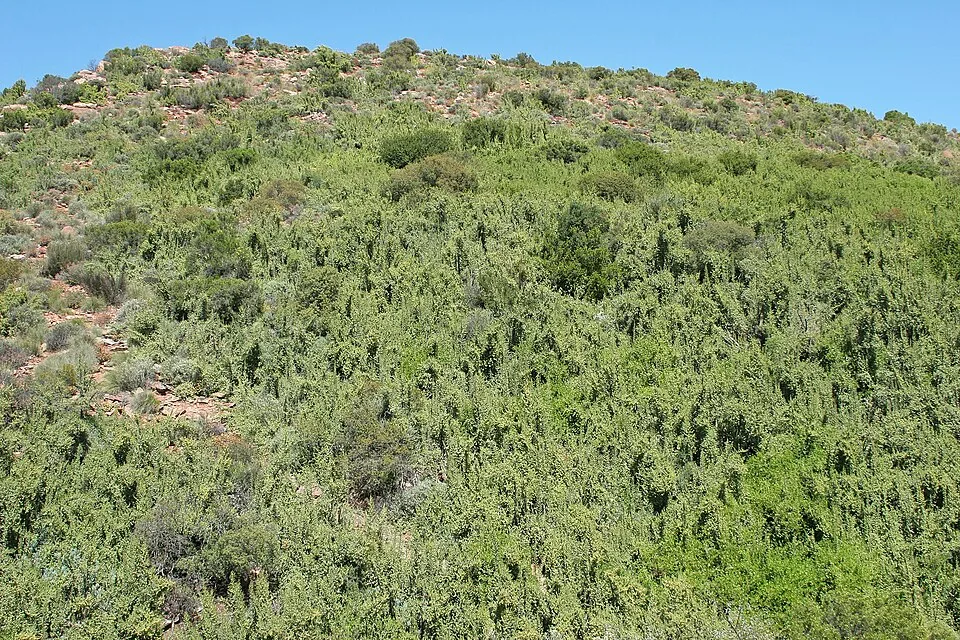
Photo : SAplants — CC BY-SA 4.0 — source

🌱 Growing conditions
☀️ Light
Very bright light; gentle sun possible
💧 Watering
Let the substrate dry substantially between waterings
🌡️ Temperature
15–28 °C
💦 Humidity
Low
🪴 Potting mix
Very well-draining succulent mix
⭐ Difficulty
Easy
🌱 Growth
Moderate
📏 Mature size
60 cm–1.5 m indoors
🌿 Habit
shrubby
📝 About Elephant bush
Description
Succulent shrub with small round fleshy leaves on reddish stems that become woody with age; it responds well to pruning and can be trained as bonsai.
Care
Place in bright indirect light with some gentle sun after acclimation. From spring to early autumn, water thoroughly then let the mix dry well; in winter keep almost dry. Use a very free-draining cactus mix and avoid oversized pots.
Repotting
Repot in spring when the roots occupy the pot well, using a stable container with drainage holes. Use a very well-draining mix and, if roots were damaged during repotting, wait a few days before watering.
Propagation
Propagate in spring from softwood or semi-mature stem cuttings. Let the cut dry briefly, then root in a very free-draining mix, ideally with bottom heat. Water very sparingly until growth resumes.
🐱 Toxicity
Generally considered of low concern, but ingestion of ornamental plants is still discouraged.
🩺 Common problems
Yellow leaves
Soft yellow leaves with wet mix mainly indicate overwatering. Leaf drop may also follow a sudden reduction in light or marked chilling. If leaves wrinkle while remaining firm and the mix is dry, lack of water is more likely.
Brown leaves
Brown areas can result from a prolonged lack of water or from moving the plant abruptly into direct sun. Reacclimate it gradually to stronger light and water only after the potting mix has dried.
Diseases
Portulacaria afra is generally disease-free. The main container risk is root and basal rot if the mix stays wet too long. Remove soft tissue, let the plant dry and resume watering cautiously.
Pests
Watch mainly for scale insects, which may hide along stems and beneath leaves. Inspect young growth regularly and isolate an infested plant before the problem spreads.