Plant profile
Cretan brake fern
Pteris cretica
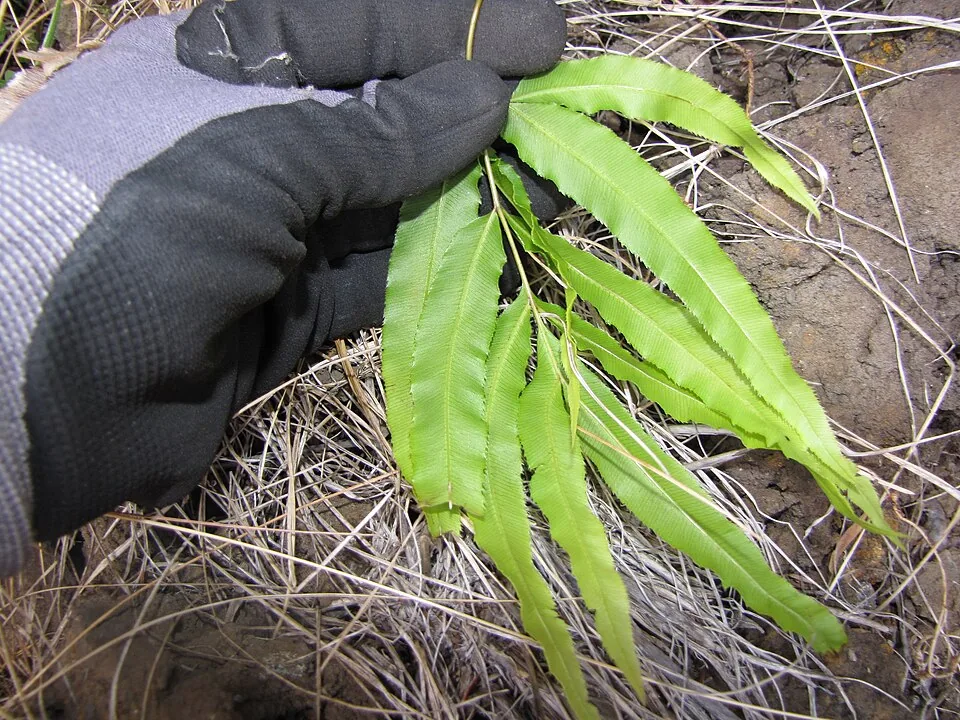
Photo : Forest and Kim Starr — CC BY 3.0 us — source

🌱 Growing conditions
☀️ Light
Medium to bright indirect light
💧 Watering
Keep evenly fresh but not waterlogged
🌡️ Temperature
15–24 °C
💦 Humidity
High
🪴 Potting mix
Humus-rich, airy and well-draining mix
⭐ Difficulty
Moderate
🌱 Growth
Moderate
📏 Mature size
30–60 cm
🌿 Habit
clumping and arching
📝 About Cretan brake fern
Description
Compact fern with arching fronds divided into long narrow pinnae; several cultivars have a silver or cream central stripe. This fern forms a clump of arching fronds divided into long pinnae, often marked by a paler central band depending on the cultivar. It prefers a mix kept lightly moist but not saturated.
Care
Give filtered light to partial shade and humid air without scorching sun. Keep the mix evenly moist but well drained: this fern dislikes both prolonged drought and standing water. Keep away from radiators and drying drafts, and remove damaged fronds at the base.
Repotting
Repot in spring when the clump fills the pot. Use a humus-rich, airy mix that holds some moisture while draining freely, and avoid burying the crown.
Propagation
Divide rhizomes in spring during repotting, keeping several fronds and roots on each section. Spores can also be used but are much slower: sow ripe spores on a fine, clean, moist medium without covering them.
🐱 Toxicity
Ingestion of ornamental plants is discouraged; keep away from animals that chew foliage.
🩺 Common problems
Yellow leaves
General yellowing with waterlogged mix often indicates oxygen-starved roots; with a dry root ball it may follow excessive drought. Very pale fronds can also reflect too much sun or poor nutrition. Old fronds naturally yellow.
Brown leaves
Brown tips or patches commonly come from dry air, prolonged thirst or overly strong direct sun.
Diseases
Indoors, the main disease problem is root rot where water stagnates. Sooty mould may develop secondarily on honeydew from scale insects. Correct drainage and remove the pest source rather than treating only the black coating.
Pests
Under glass, watch mainly for scale insects and sometimes foliar nematodes. Inspect petioles and frond undersides; isolate infested plants and remove heavily affected material.