Plant profile
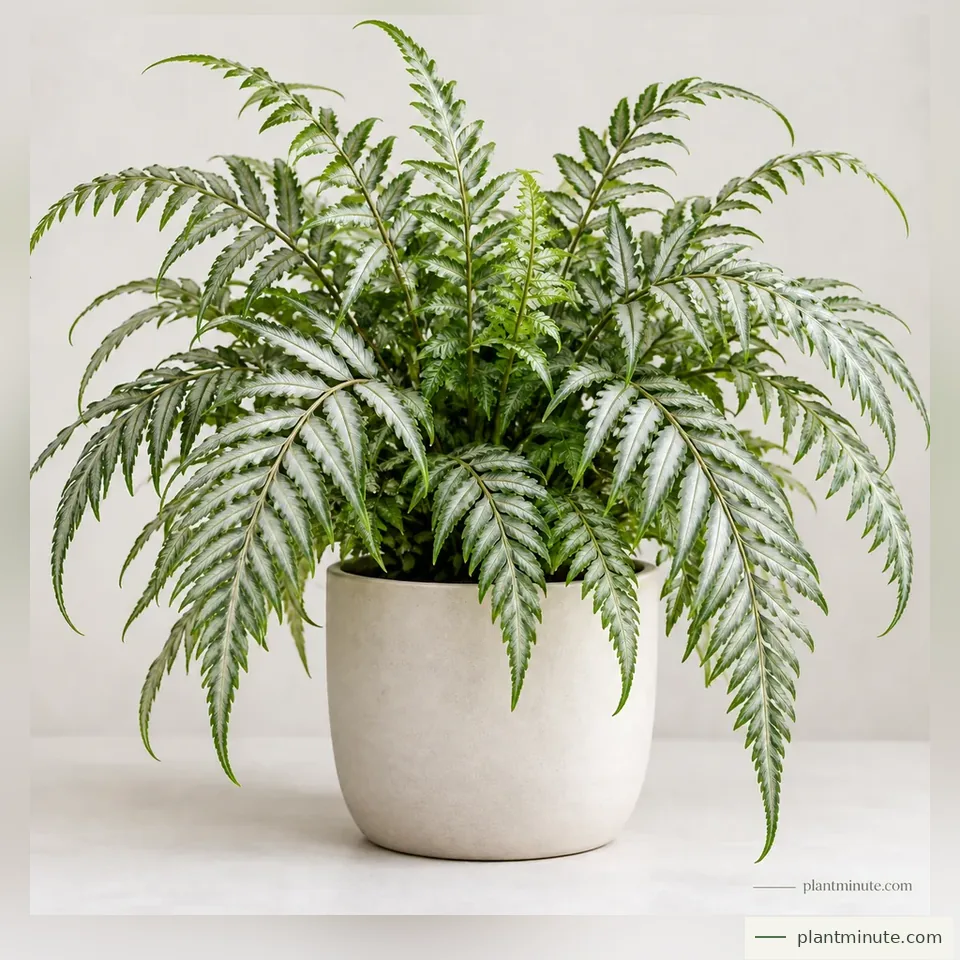
Sword brake fern
Pteris ensiformis
🌱 Growing conditions
☀️ Light
Filtered light, away from direct midday sun.
💧 Watering
Keep the mix slightly moist; let the pot drain and avoid standing water.
🌡️ Temperature
18–25°C; keep away from hot, dry air from radiators.
💦 Humidity
High; the delicate fronds brown quickly near heating.
🪴 Potting mix
Loose, organic-rich potting mix lightened with perlite.
⭐ Difficulty
Moderate to demanding
🌱 Growth
Moderate
📏 Mature size
20–50 cm
🌿 Habit
Clumping, arching fronds
📝 About Sword brake fern
Description
A small fern with delicate fronds, sometimes sold in variegated forms; this guide covers the species, not a particular cultivar.
This fern has delicate fronds whose size and colour vary by cultivar. Pale or dry fronds may indicate unstable moisture, while some variegated varieties are naturally lighter.
Care
Feed sparingly during active growth. Crisp fronds: check for a dry root ball and dry air. Yellow fronds and soft bases: review drainage and watering. High humidity without air circulation increases the risk of disease.
Keep the root ball slightly moist and avoid drying air; remove only fully dead fronds. Too much shade weakens new growth, but direct sunlight can scorch leaflets.
Repotting
In spring, replace degraded mix and divide vigorous clumps if appropriate.
Use a fresh, light mix and repot when it compacts or roots become crowded. Do not bury the crown where new fronds emerge.
Propagation
Divide a sufficiently established clump into pieces with fronds and roots. Keep divisions humid and in bright indirect light while they establish.
🐱 Toxicity
Specific toxicity data are limited; prevent children and pets from eating the plant.
🩺 Common problems
Yellow leaves
An old frond may yellow naturally. If several fronds pale, check for excessive light, a dry root ball or standing water.
Brown leaves
Dry brown tips can result from dry air, erratic watering or accumulated salts. Move away from radiators and maintain consistent moisture.
Diseases
A blackened crown and brown roots in soggy compost suggest rot. Repot gently into a draining pot rather than adding more water.
Pests
Check the underside of fronds for scale insects or mites. Regular rows of sori on fertile fronds are reproductive structures, not pests.