Plant profile
Lady palm
Rhapis excelsa
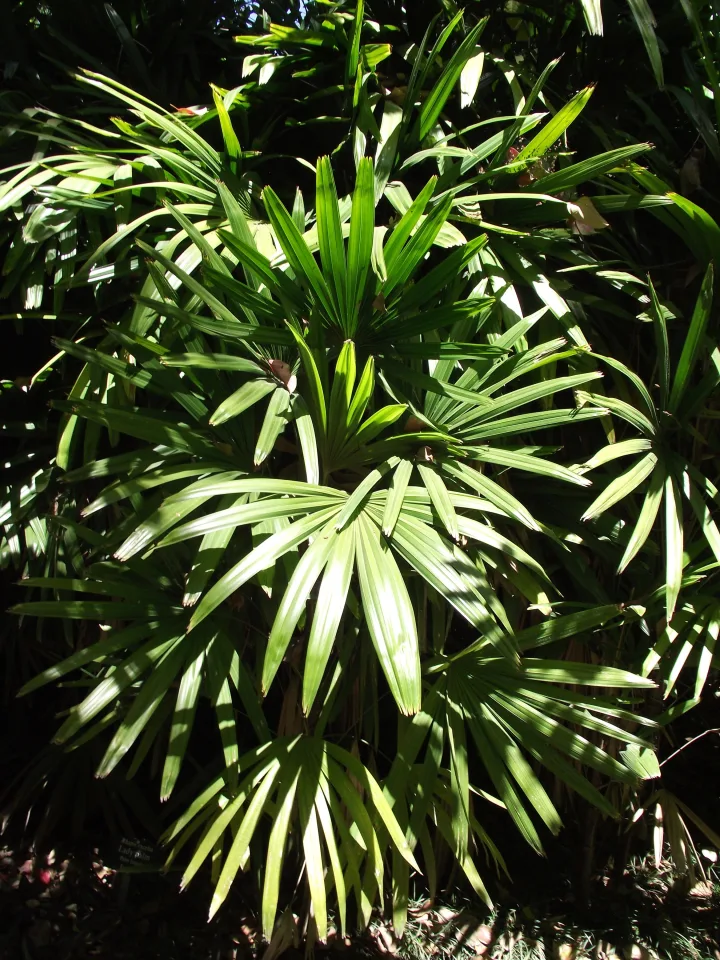
Photo : Stickpen — CC0 — source

🌱 Growing conditions
☀️ Light
Medium to bright indirect light. Tolerates lower light better than many palms.
💧 Watering
Water when the top few centimetres dry; reduce frequency in winter.
🌡️ Temperature
15–27 °C
💦 Humidity
Average; higher humidity is welcome but normal indoor air is usually acceptable.
🪴 Potting mix
Rich but well-drained, slightly acidic to neutral.
⭐ Difficulty
Easy to moderate
🌱 Growth
Slow
📏 Mature size
1.5–3 m indoors
🌿 Habit
Clumping and upright
📝 About Lady palm
Description
A slow-growing clumping palm with slender fibre-covered canes and fan-shaped leaves. It is one of the better palms for moderate indoor light and can remain attractive for many years in a stable position.
These palms are relatively well suited to indoor conditions because they tolerate filtered light better than many sun-loving palms. Their growth is slow, so deterioration of one old frond should be distinguished from a problem affecting several fronds at once. Well-established plants can remain decorative for many years in a stable position.
Care
Provide medium to bright filtered light and protect from hot direct sun. Water when the surface begins to dry, then drain thoroughly; reduce watering in winter. Very mineralised water and excess fertiliser can accentuate brown tips.
Water thoroughly, then allow the upper layer to dry slightly; never leave the root ball standing in water. Mineral-rich water and excessive fertilizer can accumulate salts and contribute to brown tips. Keep the foliage clean and remove only fronds that are fully dead, not merely marked at the tips.
Repotting
Repot only every few years or when the root ball becomes very dense. Keep the plant slightly snug and disturb the roots as little as possible.
Palm roots dislike repeated disturbance. Repot only when the root ball is genuinely crowded, keeping it as intact as possible and choosing a stable pot only a little larger. A rich but freely draining mix is preferable to dense compost that stays wet.
As a practical guideline, repot about every 2 to 3 years, or sooner if the root ball becomes extremely dense.
Propagation
Divide rooted suckers during repotting, keeping a good root system with each section. Seed is possible but slow.
Where the species produces rooted offsets, division is possible only if each section keeps a substantial root system. Species that remain solitary are normally propagated from seed, a much slower process.
🐱 Toxicity
Generally considered non-toxic to cats and dogs.
🩺 Common problems
Yellow leaves
One old lower frond may yellow naturally. Several yellow fronds can indicate a persistently wet root zone, prolonged low light or depleted potting mix.
Brown leaves
Brown tips are commonly linked to dry air, irregular watering, mineral-rich water or excess fertiliser. Large dry patches can indicate direct sun scorch.
Diseases
Generally robust; the main disease risk indoors is root rot in constantly wet mix.
Pests
Watch for scale insects and spider mites, especially along leaflet folds, stems and the fibrous canes. Early detection makes them much easier to remove.