Plant profile
Mistletoe cactus
Rhipsalis baccifera
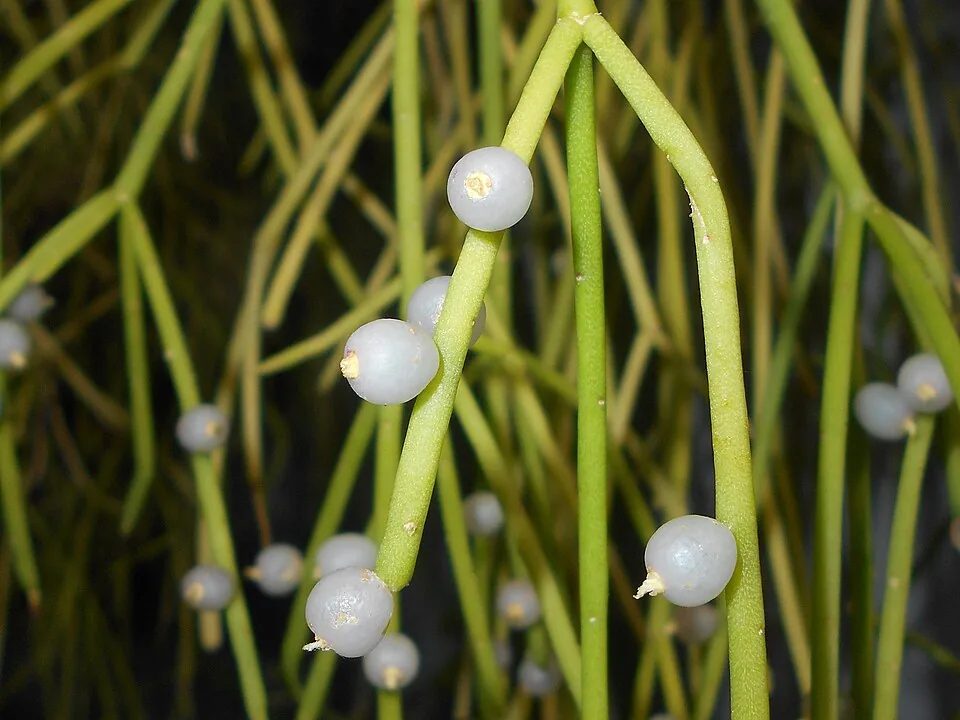
Photo : Salicyna — CC BY-SA 4.0 — source

🌱 Growing conditions
☀️ Light
Bright indirect light.
💧 Watering
This is a forest epiphytic cactus, not a desert cactus: let only part of the mix dry between waterings. Water thoroughly and drain, then space waterings further apart in winter or low light. Wrinkled stems in dry mix often indicate thirst rather than disease.
🌡️ Temperature
18 to 27 °C
💦 Humidity
Medium to high
🪴 Potting mix
Airy and well-draining
⭐ Difficulty
Easy
🌱 Growth
Moderate
📏 Mature size
trailing stems 1 to 2 m
🌿 Habit
trailing
📝 About Mistletoe cactus
Description
Tropical epiphytic cactus forming a mass of long, thin, trailing stems. Its needs are more humid and less sunny than those of desert cacti.
Care
Place in bright filtered light and water after partial drying of the mix. Maintain good air circulation and reduce watering when growth slows.
Repotting
Repot in spring into a hanging or stable pot with a very well-draining organic mix suitable for epiphytic cacti.
Propagation
Stem-segment cuttings after brief callusing.
🐱 Toxicity
Generally considered of low toxicity; nevertheless avoid ingesting large amounts.
🩺 Common problems
Yellow leaves
Excess water or damaged roots; some older stems may yellow before declining.
Brown leaves
Prolonged lack of water, direct sun or very dry air.
Diseases
Root and stem rot if the mix remains waterlogged. Segments that soften or blacken near the crown indicate excess moisture: remove affected parts and, if necessary, restart from healthy segments after allowing cuts to callus.
Pests
Mealybugs and scale insects.