Plant profile
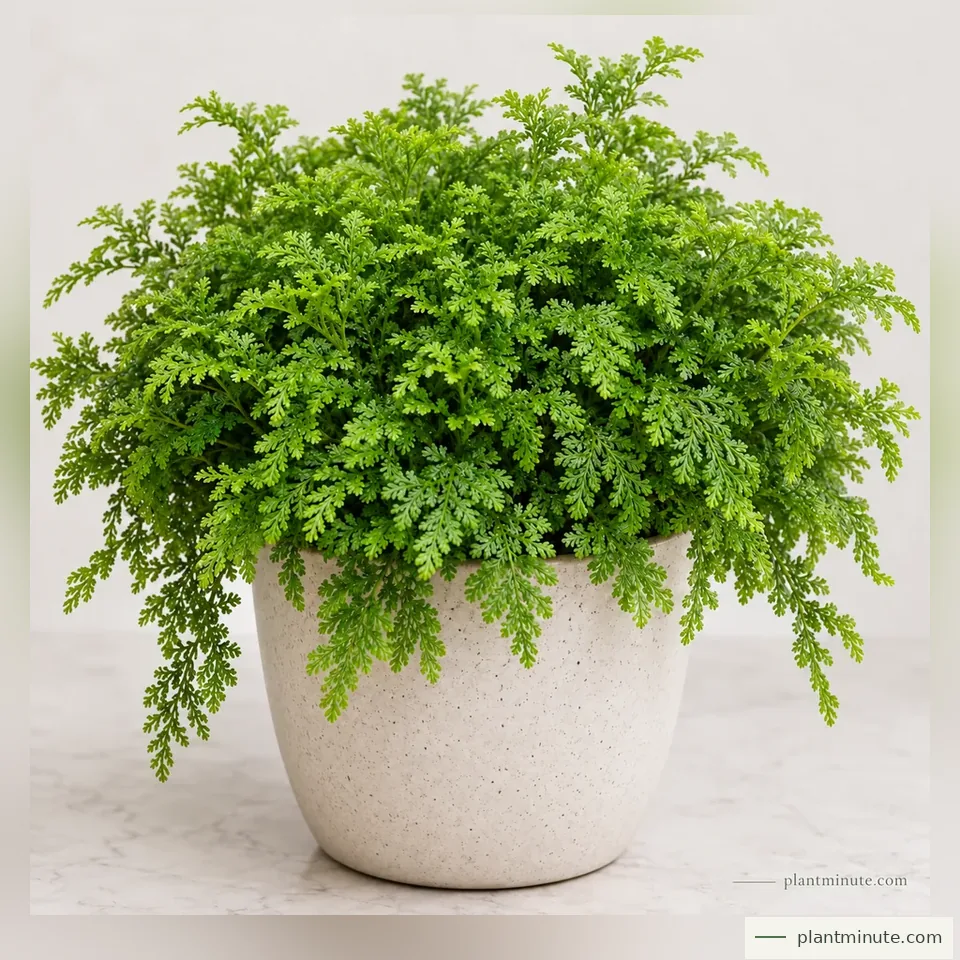
Krauss’s spikemoss
Selaginella kraussiana
🌱 Growing conditions
☀️ Light
Moderate to bright indirect light; avoid scorching direct sun.
💧 Watering
Keep the mix evenly moist without waterlogging it. Check small pots more often because they dry quickly.
🌡️ Temperature
Preferably cool to temperate, ideally 15–24 °C.
💦 Humidity
High; better in a ventilated terrarium than on a dry windowsill.
🪴 Potting mix
Fine, airy, moisture-retentive mix in a well-drained container; a ventilated terrarium can work.
⭐ Difficulty
Demanding in dry air
🌱 Growth
Fast to moderate
📏 Mature size
5–15 cm tall, spreading mat
🌿 Habit
Ground-covering
📝 About Krauss’s spikemoss
Description
A dense carpet of small green shoots, often sold for terrariums. It is not a fern, and foliage may not recover after prolonged drying.
This plant forms a branching carpet of tiny leaves. Despite its moss-like appearance, it is a lycophyte; its fine shoots quickly lose freshness when the air is too dry.
Care
Feed very sparingly with highly diluted fertilizer if grown in an open pot. Dry, brown tips: check for dry air or a dry root ball. Black stems and a musty smell: check for excess water and poor ventilation. A closed terrarium in direct sun can overheat and kill the plant quickly.
Provide filtered light and consistent moisture in the medium. In terrariums allow enough ventilation to prevent constant condensation and rot; in rooms keep it away from radiators.
Repotting
Divide clumps, keeping roots attached and maintaining good moisture during establishment.
Keep the root ball together and choose a shallow bowl or draining pot with humus-rich, airy compost. Do not repot when fully dried out; maintain gentle, humid conditions during recovery.
Propagation
Divide an established clump into sections, each with several stems and roots. Replant without burying the shoots and maintain high humidity until new growth resumes.
🐱 Toxicity
Species-specific toxicity is poorly documented. Prevent children and pets from eating it; do not claim it is guaranteed harmless.
🩺 Common problems
Yellow leaves
Uniformly yellow shoots may mean the medium dried out or, conversely, roots suffocated in waterlogged soil. Check actual moisture before watering.
Brown leaves
Crisp brown tips often indicate dry air or a dried root ball. Soft brown stems in an enclosed container suggest excessive moisture without ventilation.
Diseases
In a closed terrarium, persistent condensation and collapsing stems indicate poor ventilation. Remove affected material and improve airflow without drying out the plant.
Pests
Mealybugs and mites are possible; inspect fine branching shoots. Do not mistake pale new tips for pest damage.