Plant profile
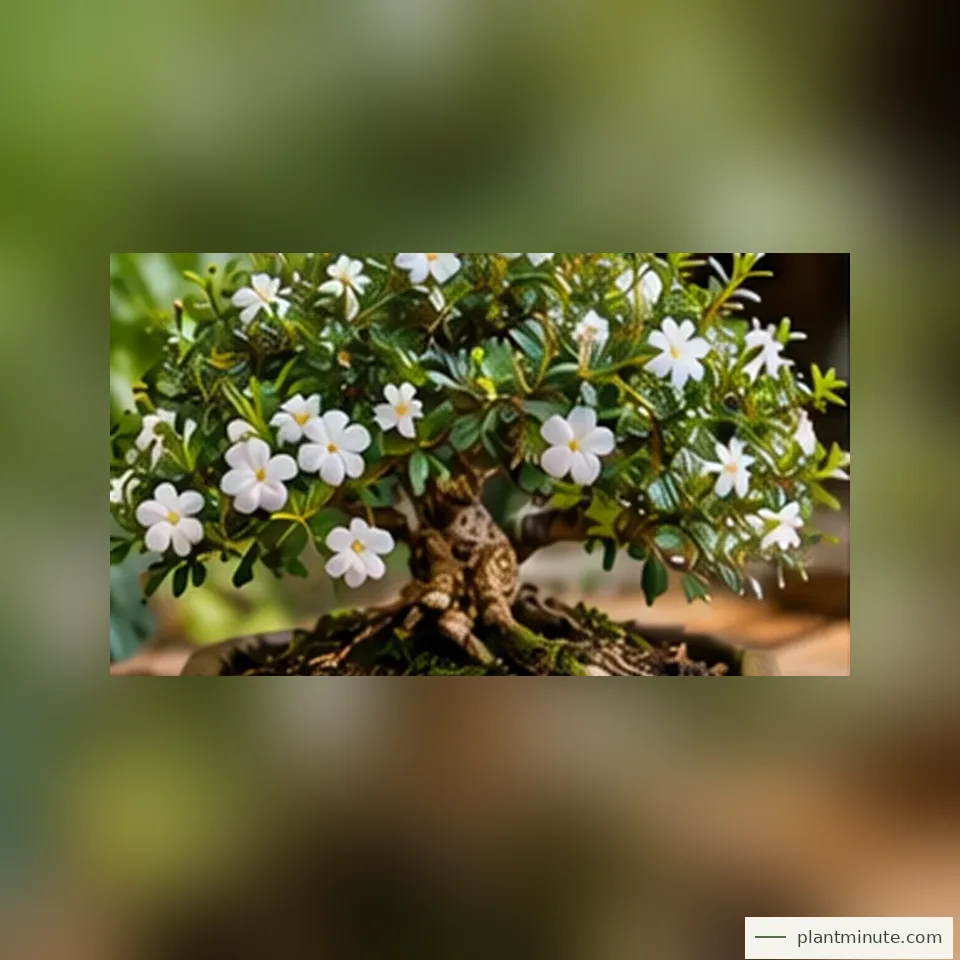
Tree of a thousand stars
Serissa japonica
🌱 Growing conditions
☀️ Light
Very bright; mild sun with gradual acclimation and protection from scorching midday sun in a small pot.
💧 Watering
Water as soon as the surface begins to dry, without drying the entire root ball or leaving standing water.
🌡️ Temperature
Bright, cool but frost-free winter conditions; avoid the dry heat of heated rooms.
💦 Humidity
Moderate; avoid extremes and overheated air.
🪴 Potting mix
Airy bonsai substrate retaining a little moisture.
⭐ Difficulty
Demanding indoors
🌱 Growth
Slow to moderate
📏 Mature size
20–60 cm as bonsai
🌿 Habit
Branched shrub, bonsai
📝 About Tree of a thousand stars
Description
A small shrub often trained as bonsai, prized for its white flowers. Abrupt changes in location or watering can cause leaf drop.
This small evergreen shrub is often sold as an indoor bonsai but needs strong light to remain dense and flower. Leaf drop after moving or a sudden change of conditions is common.
Care
Moderate bonsai fertilizer during active growth. Leaf drop: check recent moves, light, water and cold before applying multiple treatments. Poorly suited to a dark room kept warm throughout the year.
Keep it in a bright, stable position away from heaters. Water when the surface starts drying, without letting the root ball turn hard; do not combine severe pruning with drastic root cutting.
Repotting
Repot in spring at intervals suited to vigor, without drastic root pruning.
Repot as growth resumes, preserving most of the root system. A free-draining bonsai mix and close attention to watering afterwards reduce stress-related leaf loss.
Propagation
Semi-hardwood cuttings in gentle warmth.
In spring or summer take young, non-flowering stems with several nodes. Keep evenly warm with moderate moisture and protect cuttings from direct sun.
🐱 Toxicity
Toxicity information varies between sources; keep away from pets and prevent ingestion as a precaution.
🩺 Common problems
Yellow leaves
Leaves may yellow and fall after moving the plant, insufficient light or unsuitable watering. Check compost and roots before changing several conditions at once.
Brown leaves
Dry tips and brown leaves may follow a dried root ball, radiator heat or sudden strong sun. Black, soft twigs suggest root damage.
Diseases
Roots may rot in a bonsai pot with inadequate drainage. Never leave the pot standing in water, but do not let the root ball dry out entirely.
Pests
Scale insects, aphids and mites may occur, particularly after overwintering indoors in warm conditions.