Plant profile
Arrowhead vine
Syngonium angustatum
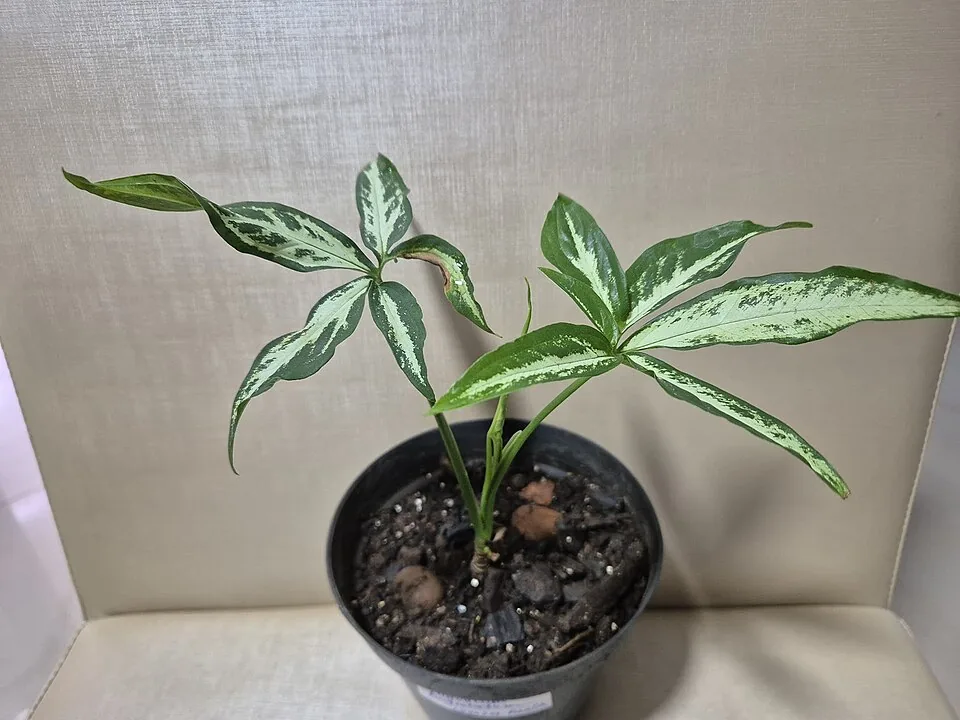
Photo : Aureonatal — CC0 — source

🌱 Growing conditions
☀️ Light
Bright to medium indirect light. It tolerates lower light but becomes looser and less deeply divided.
💧 Watering
Water when the top few centimeters of the potting mix dry, then let excess water drain.
🌡️ Temperature
18 to 28 °C
💦 Humidity
Medium to high
🪴 Potting mix
Airy, well-draining mix rich in organic matter.
⭐ Difficulty
Moderate
🌱 Growth
Moderate to fast
📏 Mature size
1 to 2 m or more with support
🌿 Habit
climbing or trailing
📝 About Arrowhead vine
Description
Syngonium angustatum is a vine whose juvenile leaves are simple and arrow-shaped, then become progressively divided into several narrow segments as the plant climbs and matures. This development is easily lost when the stems remain trailing and juvenile. A vertical support therefore allows the true transformation of the foliage to appear.
Care
Let the surface dry slightly between waterings. For mature foliage, provide a support; otherwise it can be grown trailing.
Repotting
Repot when roots truly fill the container or the mix has degraded. Choose a pot with drainage holes only slightly larger and use an airy, well-draining mix rich in organic matter. An unnecessarily large pot keeps moisture around the roots for longer.
Install a support for Syngonium angustatum during repotting if you want to see divided adult foliage; a trailing stem retains its juvenile form for longer.
Propagation
Propagate from stem cuttings carrying at least one healthy node. Root them in water, sphagnum or an airy mix; a leaf without a node cannot produce a new plant.
Take a stem section with at least one node and a visible bud; a leaf alone cannot produce a new Syngonium angustatum vine.
🐱 Toxicity
Contains or may contain irritating calcium oxalate crystals; keep out of reach of children and animals.
🩺 Common problems
Yellow leaves
If several leaves of Syngonium angustatum turn yellow, first check whether the mix stays wet too long. Also check light: a plant in low light uses less water and becomes more sensitive to overwatering.
Brown leaves
Brown edges on Syngonium angustatum can follow dry air, irregular watering or salt buildup. A dry patch on the window side suggests overly intense direct sun.
Diseases
Root rot is the most serious problem when Syngonium angustatum remains in a compact, wet mix. A soft base or abnormal smell warrants checking the roots and removing degraded tissue.
Pests
On Syngonium angustatum, inspect young leaves and their undersides especially: thrips, spider mites and scale insects can settle there. Deformed or marked new growth is a useful warning sign.