Plant profile
Pink Allusion arrowhead vine
Syngonium podophyllum 'Pink Allusion'
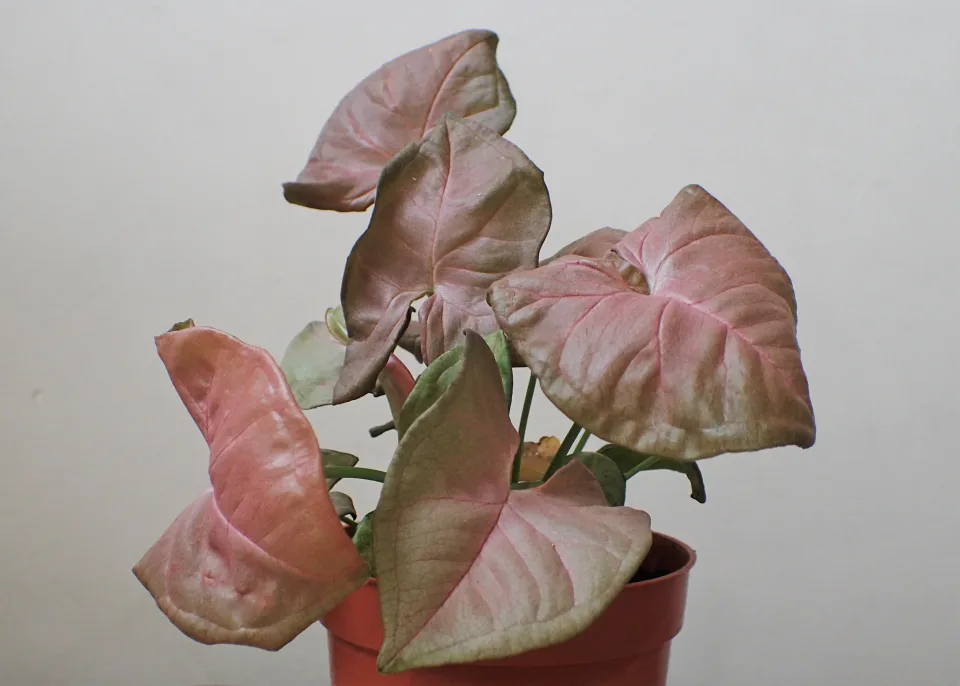
Photo : Krzysztof Ziarnek, Kenraiz — CC BY-SA 4.0 — source

🌱 Growing conditions
☀️ Light
Bright indirect light; avoid strong sun on pink areas
💧 Watering
Water when the top 2 to 4 cm of mix are dry
🌡️ Temperature
18 to 28 °C
💦 Humidity
Medium to high
🪴 Potting mix
Airy, humus-rich and well-draining
⭐ Difficulty
Easy
🌱 Growth
Fast
📏 Mature size
40 to 80 cm when kept compact; longer stems if allowed to climb
🌿 Habit
bushy, then climbing or trailing
📝 About Pink Allusion arrowhead vine
Description
Syngonium ‘Pink Allusion’ produces arrow-shaped leaves in light green to cream, traced with pink veins and soft pink tones. The color is generally gentler and more diffuse than in cultivars such as ‘Pink Splash’.
When young, the plant forms a compact clump. As it ages, it develops longer stems that can climb or trail, and the leaf shape may become more divided if the plant is allowed to mature.
Bright light keeps the growth dense and supports the pink coloration, but strong direct sun can burn the paler sections.
Care
Place the plant in bright filtered light. Water when the surface of the mix begins to dry, then allow the pot to drain completely.
Pinch growing tips if you want to keep a compact clump. For more mature growth, allow a few stems to climb a small support instead.
Do not keep roots in a heavy mix. Feed lightly every 4 to 6 weeks in spring and summer.
Repotting
Repot when roots fill the pot or the mix has become too compact. A slightly larger pot with drainage holes is enough.
A light aroid mix is ideal. If the plant will climb, use the repotting session to install its support.
Propagation
Take stem cuttings containing at least one node. Place the node in water, sphagnum moss or a light mix.
Cuttings root quickly in warmth. A leaf without a node cannot produce a new plant.
🐱 Toxicity
Toxic if swallowed because of calcium oxalate crystals.
🩺 Common problems
Yellow leaves
Excess water, insufficient light or normal aging of a lower leaf are the main causes. If several leaves yellow at once, check the root ball and the roots.
Brown leaves
Pink or cream areas scorch more readily in direct sun. Dry tips can also indicate dry air or irregular watering.
Diseases
Root rot is the main risk in saturated mix. If several leaves yellow while the root ball remains wet, inspect the roots, remove brown mushy sections and improve drainage. Leaf spots can also develop when foliage stays wet with poor airflow.
Pests
Watch especially for thrips, spider mites and mealybugs. Inspect new leaves and their undersides; isolate the plant quickly if fresh growth becomes distorted, stippled or silvery.