Plant profile
Syngonium Pink Splash
Syngonium podophyllum 'Pink Splash'
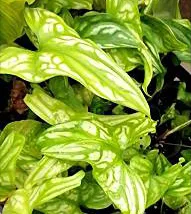
Photo : GinyLee987 — CC BY-SA 4.0 — source

🌱 Growing conditions
☀️ Light
Medium to bright indirect light; good light keeps the pink color stronger.
💧 Watering
Water when the top 2–4 cm are dry.
🌡️ Temperature
18–28 °C.
💦 Humidity
Medium to high.
🪴 Potting mix
Airy, rich and well-drained.
⭐ Difficulty
Easy
🌱 Growth
Fast
📏 Mature size
stems 1–2 m long indoors
🌿 Habit
Climbing or trailing
📝 About Syngonium Pink Splash
Description
Syngonium 'Pink Splash' has young arrow-shaped leaves covered with irregular pink splashes on a green background. The pattern varies strongly from leaf to leaf and may range from a few freckles to broad colored patches.
The plant is compact while young, then gradually develops longer climbing stems. Regular pruning keeps it bushy, whereas a support encourages larger and more mature foliage.
Strong indirect light helps maintain clear coloration. In a position that is too dark, the foliage often becomes greener and the internodes lengthen.
Care
Keep it in bright, filtered light and water after the surface has dried slightly. Avoid keeping the pot constantly wet. Prune overly long stems above a node and replant the cuttings in the same pot to make it denser. Fertilize lightly during active growth.
Repotting
Repot when the roots are crowded, using an airy aroid-style mix. A support can be added at the same time.
Propagation
Take stem cuttings with one or more nodes. They root very easily in water, sphagnum moss or a light potting mix.
🐱 Toxicity
Toxic if ingested because the tissues contain irritating calcium oxalate crystals.
🩺 Common problems
Yellow leaves
Excess water, insufficient light or natural aging of a lower leaf.
Brown leaves
Direct sun, prolonged drought or very dry air; the pink areas can show damage sooner.
Diseases
Root rot when the potting mix remains continuously wet.
Pests
Thrips, spider mites and scale insects. Inspect newly unfurling leaves, petioles and leaf undersides especially: silvery scars and distortion suggest thrips, fine stippling suggests mites, and fixed clusters or scales indicate scale insects.
On Syngonium podophyllum 'Pink Splash', watch young leaves while they are still rolled; thrips can damage the tissue before opening and later cause scars or distorted variegation that can be mistaken for a colour irregularity.