Plant profile
White Butterfly arrowhead vine
Syngonium podophyllum 'White Butterfly'
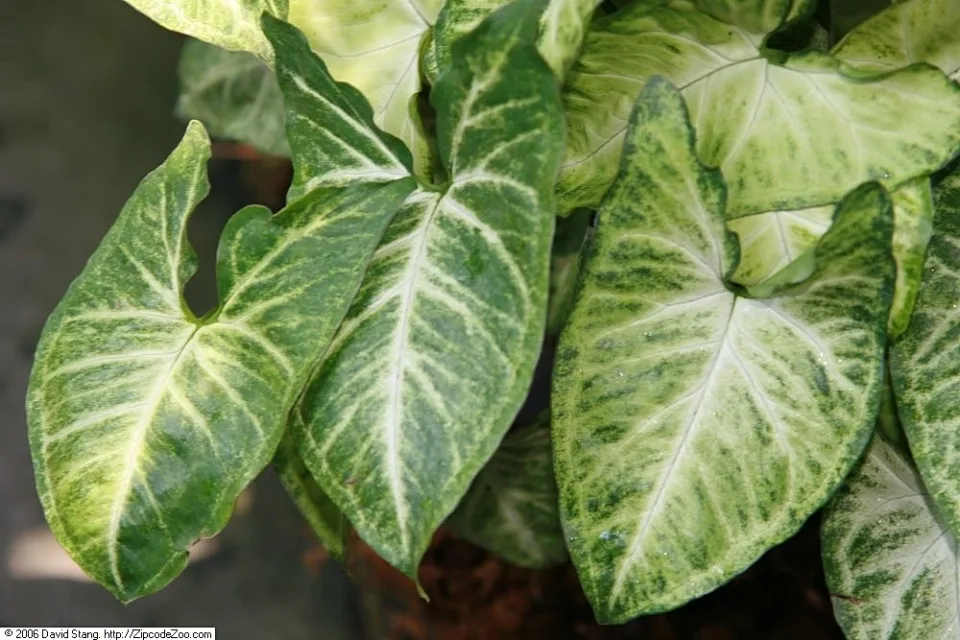
Photo : Photo by David J. Stang — CC BY-SA 4.0 — source

🌱 Growing conditions
☀️ Light
Medium to bright indirect light
💧 Watering
Allow the surface of the mix to dry slightly before watering
🌡️ Temperature
18 to 28 °C
💦 Humidity
Medium to high
🪴 Potting mix
Light, organic and well-draining
⭐ Difficulty
Easy
🌱 Growth
Fast
📏 Mature size
50 cm to more than 1 m depending on training
🌿 Habit
bushy, then climbing or trailing
📝 About White Butterfly arrowhead vine
Description
Syngonium podophyllum ‘White Butterfly’ is a classic cultivar recognized by very pale arrow-shaped leaves, creamy green in the center and greener around the edges. With enough light, the contrast remains clear and the plant quickly forms a full clump.
Like other Syngonium, its growth habit changes with age. Young leaves are simple and arrow-shaped; mature leaves can become larger and more divided when the stems are allowed to climb.
Its fast growth makes it a good introduction to aroids, provided standing water is avoided.
Care
Keep it in medium to bright light without scorching sun. The darker the room, the more the new leaves may become greener and farther apart.
Water when the top few centimeters have dried. The plant tolerates a short drop in soil moisture but suffers if the roots remain waterlogged.
Prune the stems to maintain a compact habit, or let them climb to obtain larger leaves. Feed weakly during active growth.
Repotting
Repot when roots fill the container. Use a pot with drainage holes that is only slightly larger and an airy aroid mix.
The plant can also be divided easily when several rooted stems occupy the same pot.
Propagation
Stem cuttings with at least one node root very easily in water or a light mix.
Once several roots have formed, plant into a small pot rather than a large volume of soil.
🐱 Toxicity
Toxic if swallowed because of calcium oxalate crystals.
🩺 Common problems
Yellow leaves
Overwatering is the most common cause when several leaves turn yellow. A single lower leaf may simply be old.
Low light slows the drying of the pot and can indirectly encourage yellowing.
Brown leaves
Dry margins can result from a short lack of water or very dry air. The pale areas are more sensitive to direct sunburn.
Diseases
Root rot is mainly linked to excess water. If several leaves yellow while the root ball remains wet, check the roots, remove brown and soft sections and improve drainage. Leaf spots can appear if the leaves stay wet without adequate airflow.
Pests
Watch especially for thrips, spider mites and mealybugs. Inspect new leaves and their undersides; isolate the plant quickly if fresh growth becomes distorted, stippled or silvery.