Plant profile
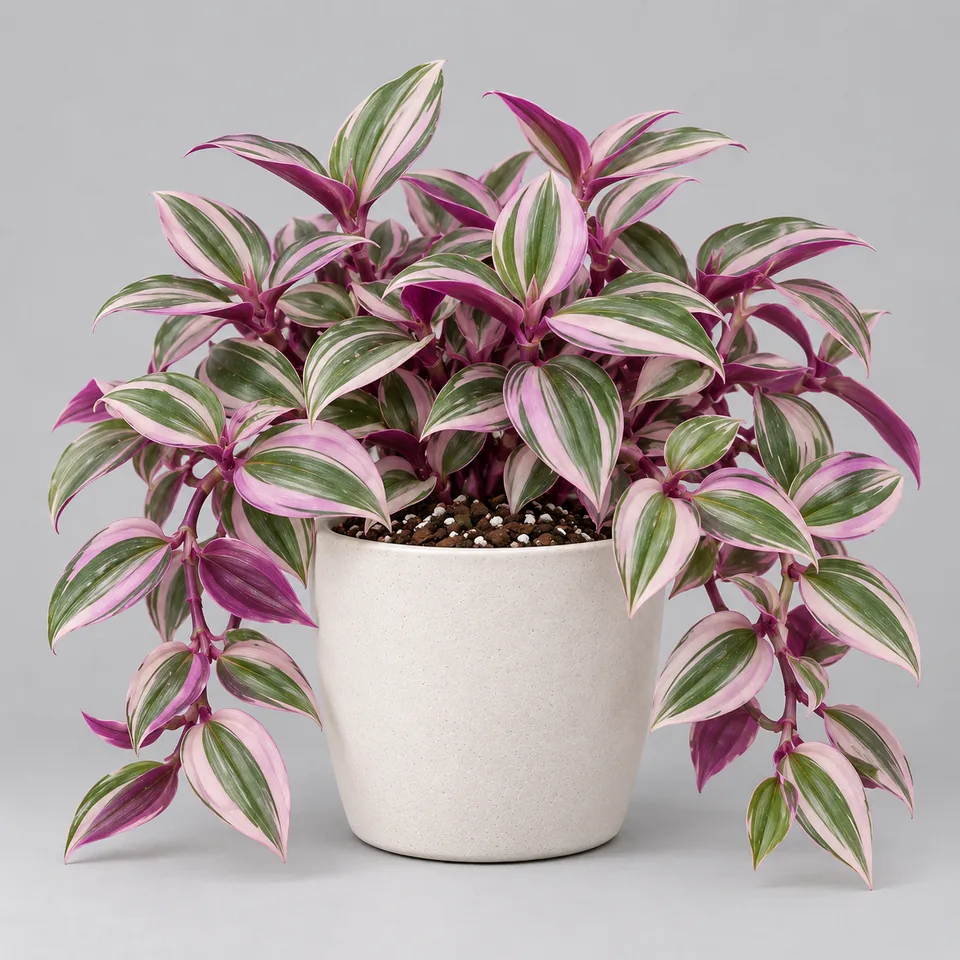
Tradescantia Nanouk
Tradescantia 'Nanouk'
🌱 Growing conditions
☀️ Light
Bright indirect light; some gentle sun helps maintain strong color.
💧 Watering
Water when the top 2–3 cm are dry.
🌡️ Temperature
18–27 °C.
💦 Humidity
Medium.
🪴 Potting mix
Light and well-drained.
⭐ Difficulty
Easy
🌱 Growth
Fast
📏 Mature size
20–40 cm high; longer trailing stems
🌿 Habit
Trailing and creeping
📝 About Tradescantia Nanouk
Description
Tradescantia 'Nanouk' forms fleshy stems carrying leaves striped in green, cream and pink, often with purple undersides. It grows quickly and is particularly well suited to hanging pots.
As the stems lengthen, the base can gradually become bare. This does not necessarily indicate poor health: regular pinching, pruning and replanting of cuttings into the same pot are useful ways to keep the plant dense.
Generous light strengthens the pink and purple tones and helps prevent excessive stretching between the nodes.
Care
Place it near a bright window. Avoid harsh midday sun through glass, especially after a period in lower light.
Water when the top layer has dried. Avoid frequently wetting the leaves and the center of young shoots, because the fleshy tissues can develop spots or rot if water remains trapped.
Pinch the growing tips regularly and replant cuttings in the same pot to maintain a dense clump.
Repotting
Repot when the roots fill the container, using a light potting mix enriched with perlite. A very deep pot is unnecessary.
Propagation
Extremely easy from stem cuttings. Cut below a node and place several cuttings directly into slightly moist potting mix or into water.
🐱 Toxicity
Sap may irritate sensitive skin; ingestion by pets is best avoided.
🩺 Common problems
Yellow leaves
Often caused by excess water or insufficient light. Older leaves at the base can also yellow naturally.
Brown leaves
Overly intense sun, prolonged drying or leaves that are regularly kept wet. Dry tips can also appear in very dry air.
Diseases
Stem rot if the potting mix remains saturated or water stagnates in the foliage.
Pests
Aphids, thrips, spider mites and scale insects. Inspect tender tips and leaf undersides. Thrips often cause silvery streaks, mites fine stippling, and aphids sticky or distorted young growth.