Plant profile
Spanish bayonet
Yucca aloifolia
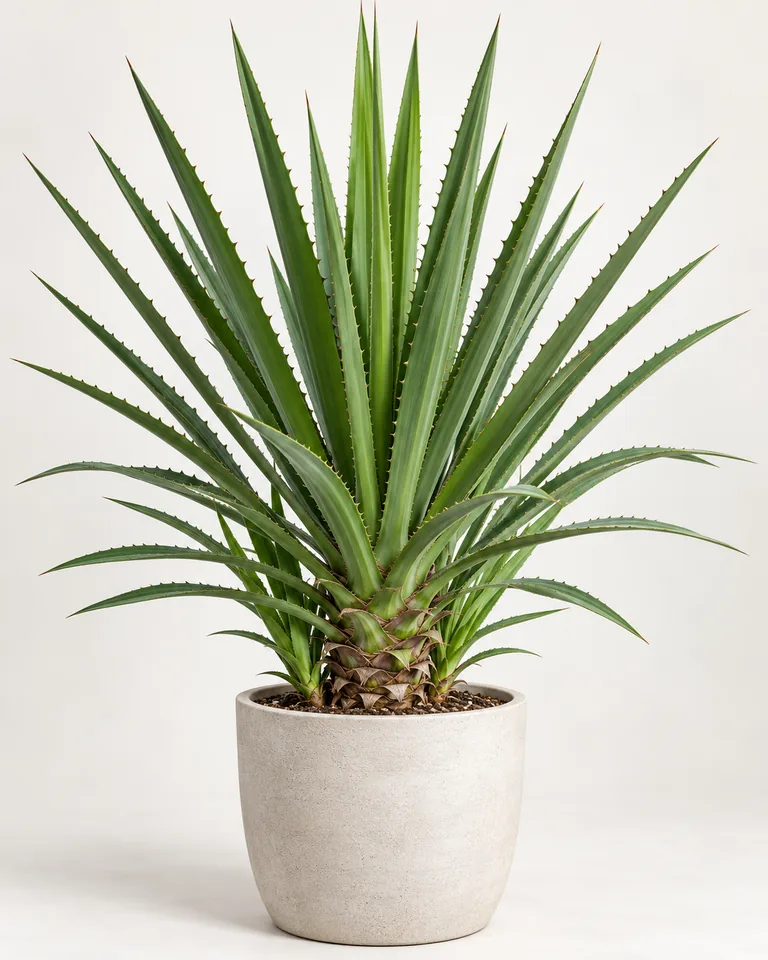
Photo : PlantMinute — Image générée
🌱 Growing conditions
☀️ Light
Very bright light, with several hours of direct sun after gradual acclimation.
💧 Watering
Allow the potting mix to dry well between waterings. Water much less in winter.
🌡️ Temperature
10 to 28 °C; it can tolerate cooler conditions for short periods if the mix stays dry.
💦 Humidity
Low to medium.
🪴 Potting mix
Very free-draining, predominantly mineral mix in a pot with drainage holes.
⭐ Difficulty
Easy
🌱 Growth
Slow to moderate
📏 Mature size
1.5 to 3 m in a pot over time
🌿 Habit
upright, tree-like
📝 About Spanish bayonet
Description
Yucca aloifolia develops a sturdy trunk topped with rosettes of long, very stiff, sharply pointed leaves. It resembles the common indoor yucca but usually has tougher, more aggressive foliage.
Indoors it needs as much light as possible. In a dark room the leaves soften, growth stretches and the risk of rot after watering rises markedly.
Care
Place it right next to a large sunny window. Turn the pot occasionally for even growth.
Water thoroughly, then wait until the mix is dry well down into the pot. Reduce watering sharply in winter. Wipe dust from the leaves and keep it away from busy walkways because of the sharp tips.
Repotting
Repot in spring when the plant becomes unstable or the roots fill the container. Use a heavy pot with drainage holes, only slightly larger than the old one.
Propagation
Propagate from basal offsets or stem sections. Let cut surfaces dry before potting to reduce rot.
🐱 Toxicity
Yuccas contain saponins and may cause digestive upset in dogs and cats if eaten. The stiff leaves can also be sharp.
🩺 Common problems
Yellow leaves
Usually overwatering, insufficient light or natural ageing of the lower leaves.
Brown leaves
Dry tips may come from prolonged drought, salt build-up or physical damage.
Diseases
Crown and root rot in cold, persistently wet soil.
Pests
Scale insects, mealybugs and spider mites. Inspect leaf undersides, nodes and young growth regularly. Silvery scarring, fine stippling, sticky honeydew or cottony clusters often reveal an infestation before it spreads.