Plant profile
Zamioculcas Raven
Zamioculcas zamiifolia 'Raven'
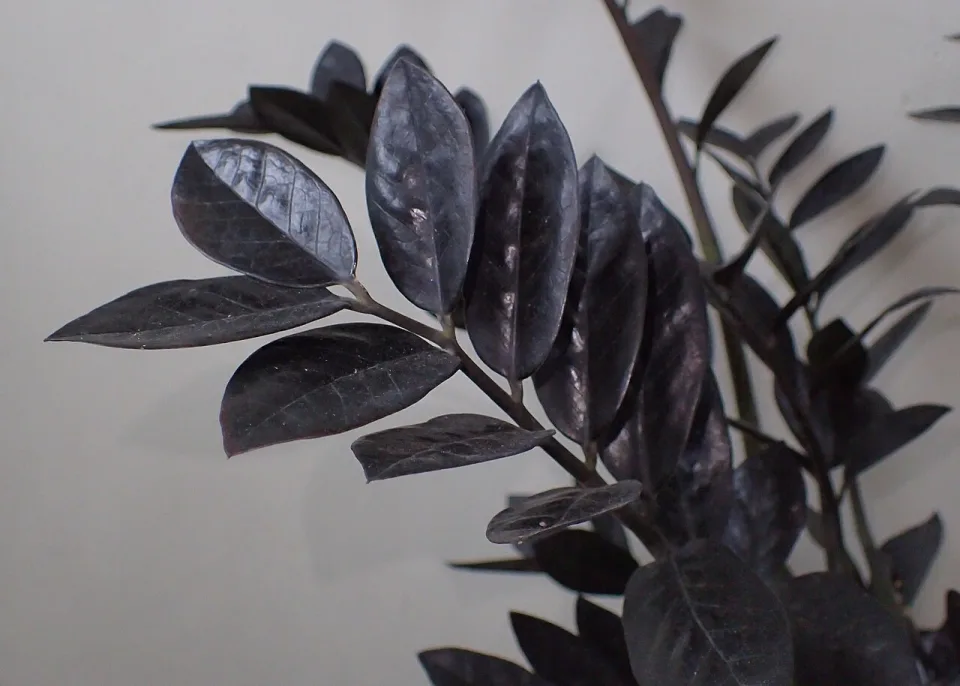
Photo : Krzysztof Ziarnek, Kenraiz — CC BY-SA 4.0
🌱 Growing conditions
☀️ Light
Low to bright indirect light
💧 Watering
Allow the potting mix to dry thoroughly between waterings
🌡️ Temperature
18–28 °C.
💦 Humidity
Low to medium
🪴 Potting mix
Very well-draining
⭐ Difficulty
Very easy
🌱 Growth
Slow
📏 Mature size
60 to 100 cm
🌿 Habit
upright
📝 About Zamioculcas Raven
Description
Zamioculcas zamiifolia 'Raven' is a dark-leaved form of the ZZ plant. New leaves emerge bright green and gradually darken until they become deep green to almost black, creating a striking contrast between young and older shoots.
Like the standard form, it stores water in fleshy rhizomes and copes well with periods of drought. Growth remains slow, and the black coloration develops progressively rather than appearing immediately as a leaf opens.
It tolerates low light, but growth is much slower there. Medium to bright indirect light produces a denser plant without requiring more frequent watering.
Care
Allow almost the entire pot to dry before watering again. The rhizomes provide a substantial water reserve and rot quickly in constantly wet potting mix. Keep the plant away from cold drafts. Wipe the leaflets to preserve their dark, glossy appearance.
Repotting
Repot only when the rhizomes become crowded or begin to distort the pot. Use a heavy container with drainage holes, only slightly larger, and a very free-draining mix.
Propagation
Divide the rhizomes during repotting, or use leaf and stem cuttings. Cuttings are easy but very slow: formation of a new rhizome can take several months.
🐱 Toxicity
Toxic if ingested, especially to dogs and cats; contains calcium oxalate crystals.
🩺 Common problems
Yellow leaves
Most often caused by excess water. If an entire stem turns yellow while the potting mix remains wet, check the rhizomes.
Brown leaves
Sudden direct sun, extreme drought or physical damage. Soft patches at the base suggest rot.
Diseases
Rhizome and root rot are the main risks when the mix remains constantly wet. Soft stems, yellowing and a sour smell should prompt an immediate root and rhizome check and a much drier watering rhythm.
Pests
Scale insects and spider mites are possible but relatively uncommon. Inspect petiole bases and leaflet undersides especially. Fixed brown scales or white cottony clusters point to scale insects; remove colonies early because the dense foliage hides them easily.