Plant profile
ZZ plant
Zamioculcas zamiifolia
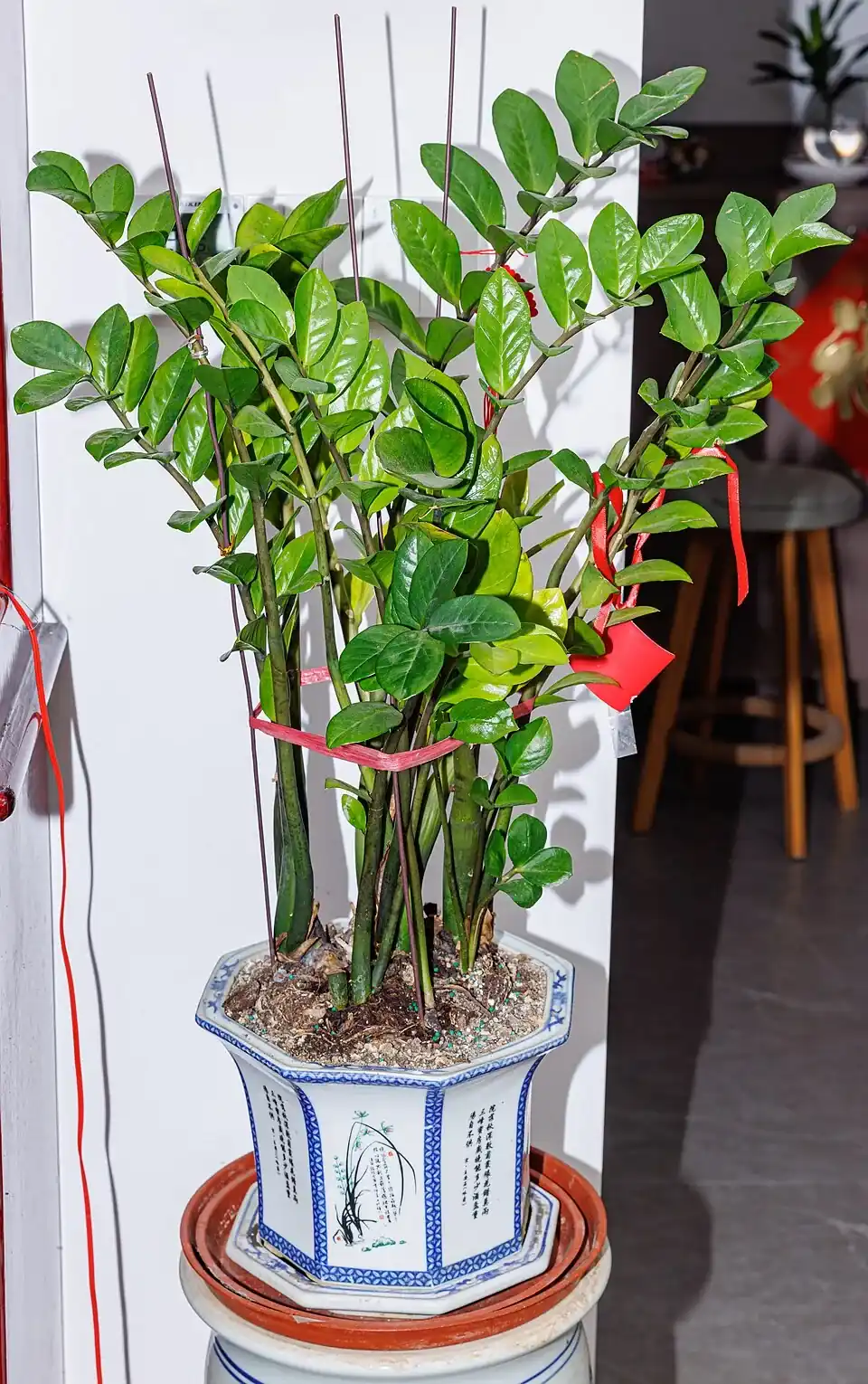
Photo : Dinkun Chen — CC BY-SA 4.0
🌱 Growing conditions
☀️ Light
Low to bright indirect light
💧 Watering
Allow the potting mix to dry thoroughly between waterings. Then water deeply and empty the saucer. The lower the light and temperature, the longer the interval should be: the rhizomes store water and tolerate missed waterings far better than constantly wet soil.
🌡️ Temperature
16 to 29 °C
💦 Humidity
Low to medium
🪴 Potting mix
Very well-draining
⭐ Difficulty
Very easy
🌱 Growth
Slow
📏 Mature size
60 to 100 cm
🌿 Habit
upright
📝 About ZZ plant
Description
Hardy rhizomatous plant with upright glossy leaf stalks and fleshy roots that store water. It tolerates lower light and irregular watering better than many houseplants, but dislikes persistently wet mix.
Care
Prefer medium to bright indirect light; low light is tolerated, but growth becomes slower and weaker. Avoid scorching sun through glass. Wipe the leaflets occasionally so they photosynthesise efficiently, and feed lightly only during active growth. Overwatering remains the main risk.
Repotting
Repot when the rhizomes visibly distort the pot or roots occupy most of the volume, usually less often than for fast-growing houseplants. Use a pot with drainage holes only slightly larger than the old one and a very airy mix; an oversized pot dries too slowly and raises the risk of rot.
Propagation
Rhizome division is the quickest method: separate a section with roots and at least one shoot. Individual leaflets or leaf sections can also root and form a new rhizome, but this is slow and it may take several months before a new shoot appears.
🐱 Toxicity
Toxic if ingested, especially to dogs and cats; contains calcium oxalate crystals.
🩺 Common problems
Yellow leaves
If several stems or leaflets yellow while the mix remains wet, first suspect overwatering and oxygen-starved roots. A soft stem or unusual smell strengthens the diagnosis of rot. A single old stem yellowing can simply be natural ageing.
Brown leaves
Pale patches that later turn brown on the window-facing side suggest sun scorch; dry tips with a very dry mix can reflect prolonged dehydration. Dark, soft tissue near the base, especially with wet soil, points instead toward rot.
Diseases
Rhizome and root rot are the most serious problems. If the base becomes soft, blackened or foul-smelling, remove the plant from its pot, cut away rotten tissue with a clean tool, let wounds dry, then repot into a very free-draining mix. Do not resume watering until the substrate has dried sufficiently.
Pests
It is relatively pest-resistant, but mealybugs and scale insects may hide on petioles, at leaflet bases or near the crown. Isolate the plant, remove visible colonies and inspect repeatedly for several weeks to catch newly emerged pests.