Plant profile
Flame violet
Episcia cupreata
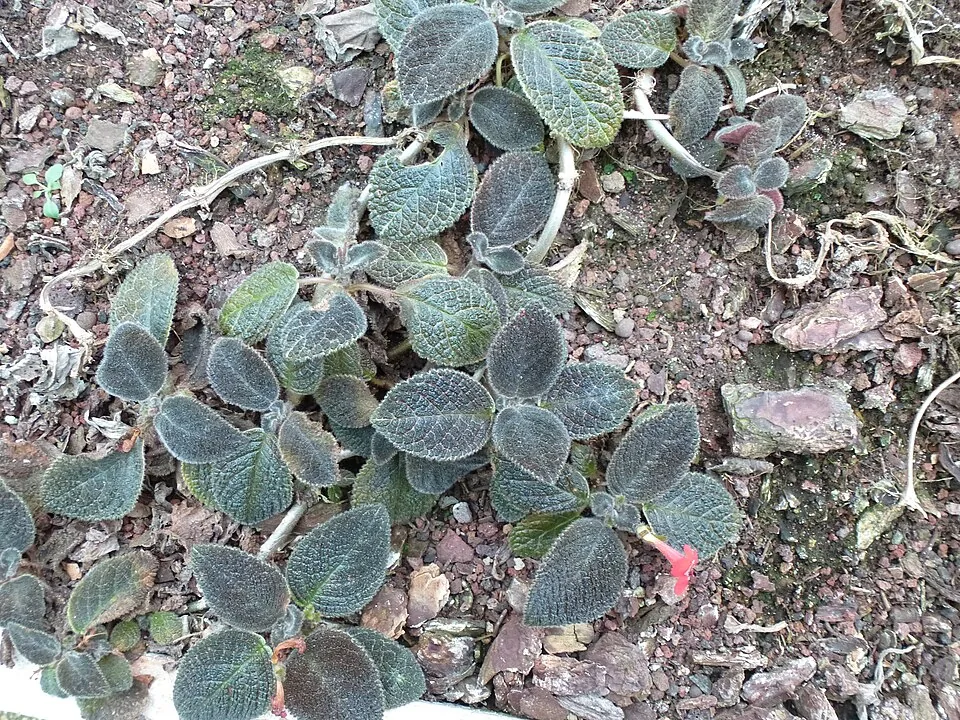
Photo : Salix — CC BY-SA 3.0 — source

🌱 Growing conditions
☀️ Light
Bright indirect light
💧 Watering
Keep slightly moist without waterlogging
🌡️ Temperature
18–27 °C
💦 Humidity
High
🪴 Potting mix
Humus-rich, airy and well-draining mix
⭐ Difficulty
Moderate
🌱 Growth
Fast
📏 Mature size
10–20 cm; stolons 30–60 cm or more
🌿 Habit
creeping or trailing
📝 About Flame violet
Description
Creeping gesneriad with velvety leaves often marked copper, silver or veins, plus small red or orange tubular flowers; it produces many stolons.
Care
Give bright filtered light without scorching sun. Keep temperatures steady and humidity fairly high, while maintaining air movement around the foliage. Water when the surface begins to dry and avoid cold water on the velvety leaves. Pinch long stems to keep the plant dense.
Repotting
Repot when roots and stolons fill the container, using a wide shallow pot with drainage holes. Choose an airy, humus-rich mix that stays lightly moist without becoming waterlogged.
Propagation
Take stem tips or runners with several nodes. Lay or insert them shallowly into a fine, airy mix kept just moist and warm. Rosettes root readily at the nodes; separate them only after active roots have formed.
🐱 Toxicity
Generally considered of low concern for pets, but ingestion is still discouraged.
🩺 Common problems
Yellow leaves
Soft yellow leaves with wet mix mainly indicate overwatering or poorly aerated roots. If new growth becomes pale and stretched, check for insufficient light instead. An isolated lower leaf may yellow naturally with age.
Brown leaves
Brown edges or patches are most often caused by air that is too dry, prolonged lack of water or excessively strong direct sun. Keep the potting mix slightly moist and place the plant in bright but filtered light.
Diseases
The main disease problems are root, crown and stem rots when the mix stays saturated, and botrytis when foliage remains wet with poor air movement. Remove soft tissue, reduce substrate moisture and improve ventilation.
Pests
Watch for mealybugs, aphids, thrips and mites, especially on young growth and leaf undersides. Distorted new leaves or silvery scarring should prompt a close inspection and isolation if needed.