Plant profile
Rattlesnake plant
Goeppertia insignis
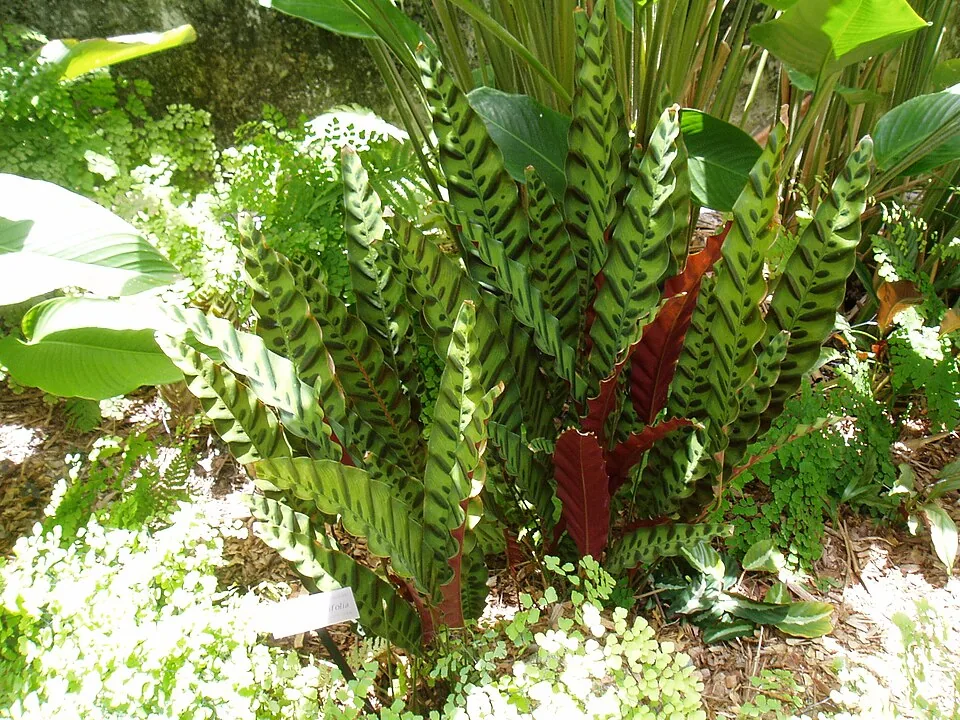
Photo : Cary Bass (now Bass-Deschênes) — CC BY-SA 3.0 — source

🌱 Growing conditions
☀️ Light
Medium to bright indirect light only. Direct sun quickly scorches the leaves, while very low light weakens the leaf pattern.
💧 Watering
Keep the mix lightly moist without waterlogging it. Water when the top 1–2 cm begin to dry, preferably with low-mineral water. Reduce watering clearly in winter if growth slows.
🌡️ Temperature
18 to 27 °C
💦 Humidity
High
🪴 Potting mix
Use a soft, draining mix: houseplant compost lightened with perlite plus a little fine bark or coco fibre. It should hold some moisture while remaining airy.
⭐ Difficulty
Moderate
🌱 Growth
Moderate
📏 Mature size
60 to 80 cm
🌿 Habit
clumping
📝 About Rattlesnake plant
Description
Marantaceae with long, wavy light-green leaves marked with dark-green spots and purple undersides. Its pattern can evoke rattlesnake skin.
Care
Keep temperatures steady and humidity fairly high. Avoid cold drafts, abrupt temperature changes and standing water in the cover pot.
Repotting
Repot in spring when the clump becomes tight, using a rich, airy mix.
Propagation
Divide the rhizome, keeping several shoots on each section.
🐱 Toxicity
Generally considered non-toxic to cats and dogs.
🩺 Common problems
Yellow leaves
Excess water, cold or root stress.
Brown leaves
Brown tips usually point to dry air, hard water or irregular watering. Larger dry patches can also result from too much direct sun.
Diseases
Root rot and leaf spots.
Pests
Spider mites and scale insects.