Plant profile
Maranta Lemon Lime
Maranta leuconeura 'Lemon Lime'
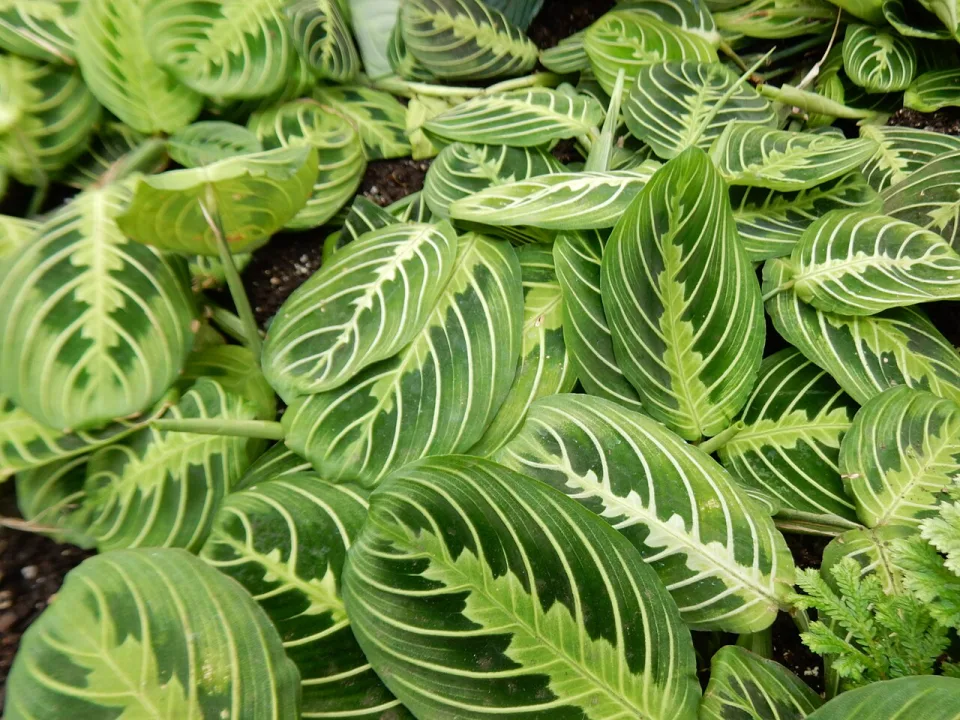
Photo : Shuvaev — CC BY 4.0 — source

🌱 Growing conditions
☀️ Light
Medium to bright indirect light; no intense direct sun.
💧 Watering
Keep lightly moist, allowing only the surface to dry.
🌡️ Temperature
18–27 °C.
💦 Humidity
High, ideally 55–70% or more with good air circulation.
🪴 Potting mix
Humus-rich, light and airy, moisture-retentive but not compact.
⭐ Difficulty
Demanding
🌱 Growth
Moderate
📏 Mature size
20–35 cm tall, with stems spreading wider.
🌿 Habit
Clumping
📝 About Maranta Lemon Lime
Description
Maranta leuconeura 'Lemon Lime' has oval dark green leaves crossed by bright yellow-green veins. The contrast is more lemon-colored than on the familiar red-veined forms.
Like other so-called prayer plants, its leaves change their angle between day and night. The plant remains low and gradually spreads outward, making it suitable for shelves and broad hanging containers.
It prefers fairly even moisture, but the roots must never sit in water. Highly mineralized water and dry air are common causes of brown leaf tips.
Care
If your tap water is very hard, use low-mineral water if possible. Keep the potting mix lightly moist without alternating between complete drought and saturation. Provide atmospheric humidity together with adequate air circulation. Avoid strong direct sun completely.
Repotting
Repot when the roots fill the container or when the mix has become compacted. A wide but not excessively deep pot suits its rhizomatous habit.
Propagation
Divide the clump during repotting, or take stem cuttings bearing nodes where suitable stems are available. Each division must retain several healthy roots.
🐱 Toxicity
Generally regarded as non-toxic to dogs and cats.
🩺 Common problems
Yellow leaves
Excess water, chilled roots or poor drainage. An old outer leaf may yellow naturally.
Brown leaves
Brown tips and edges are very common with dry air, mineral-rich water, direct sun or irregular watering. Use softer water if possible, keep moisture more even and move the plant away from hot direct sun.
Diseases
Root rot develops in persistently wet mix, while leaf spots are favoured by wet foliage and stagnant air. Improve drainage and airflow and avoid keeping the leaves wet for long periods.
Pests
Mainly spider mites in dry air, but also thrips and scale insects. Check first for spider mites on leaf undersides, especially in dry air: fine stippling, dull foliage, then fine webbing. Scale insects tend to hide along petioles and veins.