Plant profile
Swiss cheese vine
Monstera adansonii
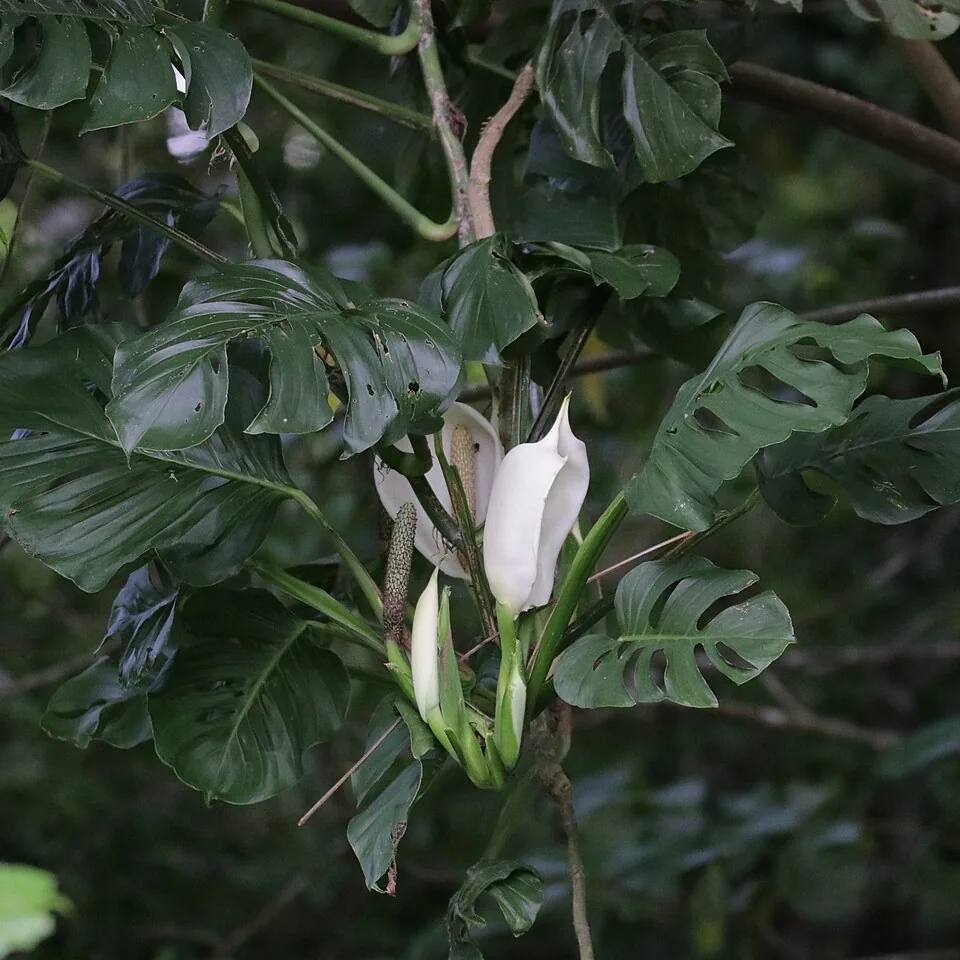
Photo : Aitor — CC BY 4.0 — source

🌱 Growing conditions
☀️ Light
Bright indirect light; protect from scorching sun.
💧 Watering
Water when the first few centimeters of the mix begin to dry, without standing water.
🌡️ Temperature
18 to 27 °C
💦 Humidity
Medium to high
🪴 Potting mix
Rich, airy and well-draining.
⭐ Difficulty
Moderate
🌱 Growth
Moderate to fast
📏 Mature size
1 to 3 m or more with support
🌿 Habit
climbing or trailing
📝 About Swiss cheese vine
Description
Climbing aroid from tropical America, recognizable by leaves pierced with numerous oval fenestrations. With a support and good conditions, the leaves gradually become larger and more perforated.
Care
Place in bright indirect light and provide a stake or support if larger leaves are desired. Water after the first few centimeters have dried and maintain an airy mix; avoid scorching sun.
Repotting
Repot in spring when roots fill the pot, using a coarse, well-draining aroid mix. Install the support during repotting to limit root damage.
Propagation
Take a stem section with at least one node; the presence of an aerial root generally makes rooting easier.
🐱 Toxicity
The plant contains irritating calcium oxalate crystals; prevent ingestion by children and pets.
🩺 Common problems
Yellow leaves
Often linked to excess water, overly compact mix or insufficient light; an old leaf can also yellow naturally.
Brown leaves
Brown tips in dry air or with irregular watering; pale dry patches may appear after overly strong sun exposure.
Diseases
Root and stem rot develop mainly when the mix remains waterlogged. Soft dark tissue, sour odour or persistent yellowing should prompt an immediate check of roots, drainage and watering frequency.
Pests
Thrips, spider mites and scale insects are the main pests to look for on young leaves and their undersides.