Plant profile
Swiss cheese plant
Monstera deliciosa
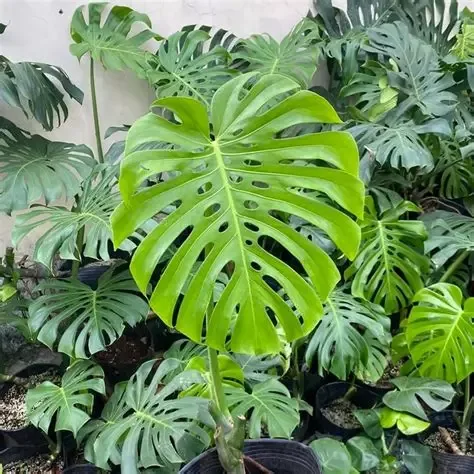
Photo : Forest & Kim Starr — CC BY 3.0 — source

🌱 Growing conditions
☀️ Light
Bright indirect light
💧 Watering
Moderate: allow the potting mix to dry slightly between waterings
🌡️ Temperature
18 to 27 °C
💦 Humidity
Prefers fairly high humidity
🪴 Potting mix
Rich, airy and well-draining
⭐ Difficulty
Very easy
🌱 Growth
Fast in good conditions
📏 Mature size
1.5 to 3 m indoors
🌿 Habit
climbing
📝 About Swiss cheese plant
Description
Monstera deliciosa is a tropical climbing plant famous for its large green leaves, which gradually develop splits and holes as the plant matures. Native to tropical American forests, it naturally climbs trees and can reach impressive dimensions.
Indoors, Monstera is valued both for its spectacular foliage and its relatively easy care. Young leaves are usually entire; the characteristic splits and perforations appear with age, especially when the plant receives good light and favorable growing conditions.
With enough space and a support to climb, such as a stake or moss pole, it can produce increasingly large leaves and become a striking centerpiece in an indoor plant collection.
Care
Place Monstera in a bright spot protected from intense direct sun, which can scorch the foliage. Water when the top few centimeters of the potting mix have dried, and do not let water stand in the cachepot or saucer. It appreciates fairly humid air but generally adapts well to heated indoor conditions. A support is recommended as the plant grows to accommodate its naturally climbing habit. Occasionally wiping the large leaves also removes accumulated dust.
Repotting
Repot preferably in spring when the roots occupy much of the pot or begin to emerge from the drainage holes. Choose a pot only slightly larger than the previous one and with drainage holes. Use a rich but very airy, well-draining mix. Large specimens can become difficult to repot; in that case, replacing the top few centimeters of potting mix may be sufficient between full repottings.
Propagation
Monstera is easily propagated from stem cuttings. Take a section with at least one node, ideally with a leaf and an aerial root. A leaf cut on its own without a node cannot produce a new plant. The cutting can be rooted in water or directly in a light, moist potting mix. Once the root system is sufficiently developed, it can be planted in its permanent pot.
🐱 Toxicity
Toxic if ingested, especially to cats and dogs
🩺 Common problems
Yellow leaves
An occasional older yellowing leaf can simply be part of normal foliage renewal. Extensive yellowing or several yellow leaves may instead result from watering too frequently, constantly wet potting mix, poor drainage or insufficient light. Check the moisture level before watering again and make sure excess water can drain freely.
Brown leaves
Brown tips or edges may appear when the air is very dry, watering is irregular or the plant remains without enough water for a prolonged period. Dry, discolored brown areas can also result from sudden exposure to strong direct sun. If spots are soft and the potting mix remains constantly wet, inspect the roots and reduce watering.
Diseases
The main risk is root rot, generally encouraged by constantly waterlogged potting mix or poor drainage. Affected roots become brown or black and soft, and the plant may yellow or lose vigor. Remove rotten parts, repot in fresh, well-draining mix if necessary, then allow longer intervals between waterings.
Pests
Monstera can be attacked by scale insects, mealybugs, spider mites and, less commonly, thrips. Regularly inspect leaf undersides, petioles and new growth. Isolate an infested plant from other plants and treat it promptly. Manual cleaning and regular checks help detect an infestation before it becomes severe.