Plant profile
Florist's gloxinia
Sinningia speciosa
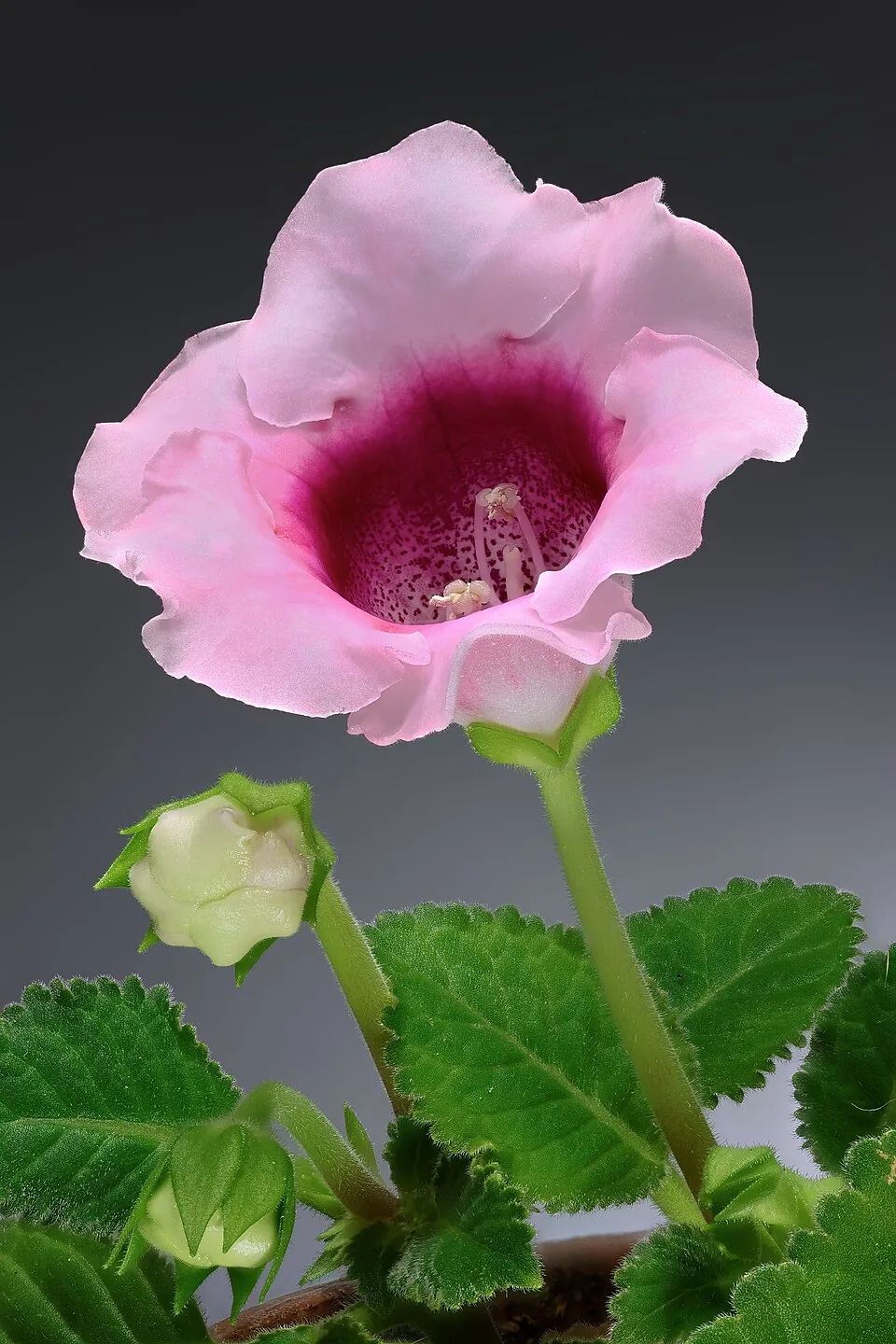
Photo : Mister rf — CC BY-SA 4.0 — source

🌱 Growing conditions
☀️ Light
Bright indirect light
💧 Watering
Keep slightly moist during growth; reduce strongly during dormancy.
🌡️ Temperature
18–25 °C
💦 Humidity
Medium to high
🪴 Potting mix
Light, well-draining mix
⭐ Difficulty
Moderate
🌱 Growth
Fast
📏 Mature size
20–30 cm; about 40 cm in flower
🌿 Habit
tuberous rosette
📝 About Florist's gloxinia
Description
Tuberous plant with large velvety leaves and richly colored bell-shaped flowers; after flowering the foliage may disappear and the tuber can enter dormancy.
Care
During active growth, place in bright light without direct sun and keep the mix evenly moist but well drained. Avoid wetting the crown and velvety foliage. After flowering, gradually reduce water until the foliage dies back, then keep the tuber cool and resting until new shoots appear.
Repotting
Repot the tuber at the start of new growth in a small pot, keeping its upper part near the surface.
Propagation
Propagate in spring or early summer from leaf cuttings with a petiole, which can root in water or a light mix. Leaf sections containing a main vein can also form new plants. Seed and experienced tuber division are further options.
🐱 Toxicity
Ingestion of ornamental plants is discouraged; keep out of reach of animals.
🩺 Common problems
Yellow leaves
Soft yellow leaves with wet mix mainly indicate overwatering or early rot. At the end of the cycle, gradual yellowing of all foliage after flowering is normal and signals dormancy. Excessive direct sun can also bleach the leaves.
Brown leaves
Brown edges can result from dry air, excessively strong direct sun or a prolonged lack of water. Keep the potting mix slightly moist during active growth and avoid leaving the foliage wet for long periods.
Diseases
Crown or tuber rot and botrytis are favoured by water on the foliage, excess moisture and poor air movement. Water at substrate level, remove affected tissue and improve ventilation.
Pests
Watch mainly for aphids, thrips, spider mites and mealybugs on young growth and flowers. Distorted or scarred flowers, or fine stippling on leaves, should prompt close inspection.