Plant profile
False African violet
Streptocarpus saxorum
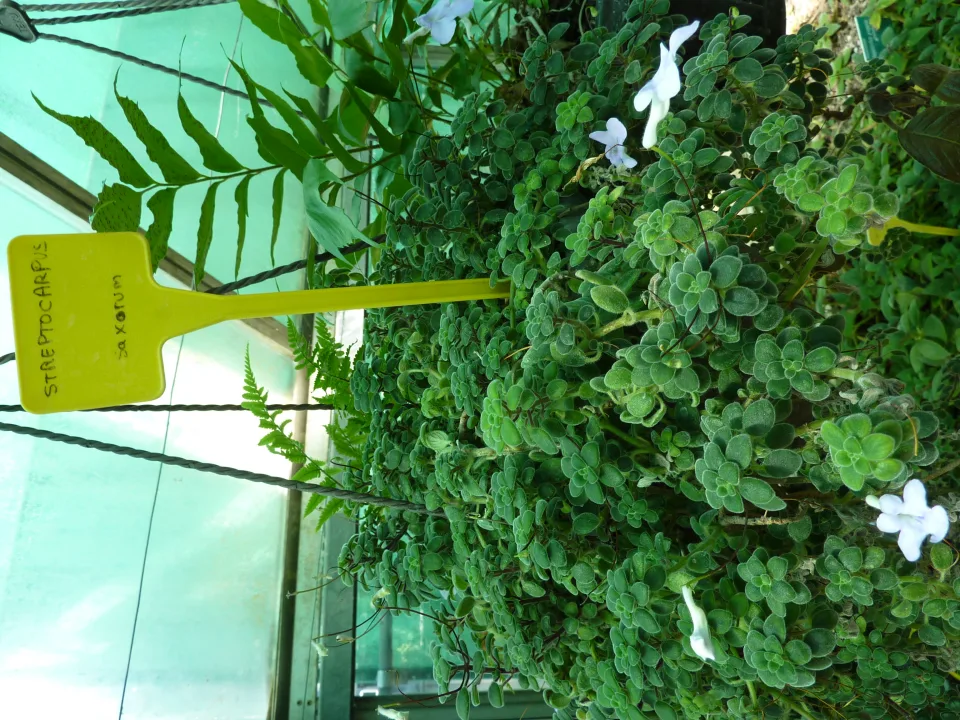
Photo : Salix — CC BY-SA 3.0
🌱 Growing conditions
☀️ Light
Bright indirect light; gentle morning sun is possible.
💧 Watering
Keep lightly moist during growth, allowing the surface to dry between waterings.
🌡️ Temperature
18 to 26 °C.
💦 Humidity
Average to high.
🪴 Potting mix
Light, humus-rich and very free-draining, similar to an African violet mix.
⭐ Difficulty
Easy to moderate
🌱 Growth
Fast
📏 Mature size
20 to 30 cm, with longer trailing stems
🌿 Habit
trailing and branched
📝 About False African violet
Description
Streptocarpus saxorum forms many small fleshy leaves and produces blue-violet flowers with a pale throat on long slender stems. With enough light it can flower for a long period.
It works very well in a hanging pot or on a shelf. Its mix should stay lightly fresh, but the fine roots rot quickly if the pot remains waterlogged.
Care
Place it near a bright window protected from strong sun. Water when the surface starts to dry and avoid splashing cold water over the foliage.
Pinch tips for a denser plant and remove spent flowers. During bloom, use a very dilute flowering fertiliser every 2–3 weeks.
Repotting
Repot in spring into a small pot with drainage holes. It flowers well when the roots are not surrounded by an excessive volume of mix.
Propagation
Stem cuttings are very easy, and leaf cuttings are also possible. Root them in a light warm mix.
🐱 Toxicity
No major toxicity is commonly reported, but eating ornamental plants should still be discouraged.
🩺 Common problems
Yellow leaves
Excess water, low light or natural ageing of older leaves.
Brown leaves
Drought, direct sun, cold water or salt deposits. Avoid leaving wet leaves in stagnant air.
Diseases
Root rot and botrytis in overly humid, poorly ventilated conditions.
Pests
Thrips, aphids, spider mites and mealybugs. Inspect leaf undersides, nodes and young growth regularly. Silvery scarring, fine stippling, sticky honeydew or cottony clusters often reveal an infestation before it spreads.