Plant profile
Stromanthe Triostar
Stromanthe thalia 'Triostar'
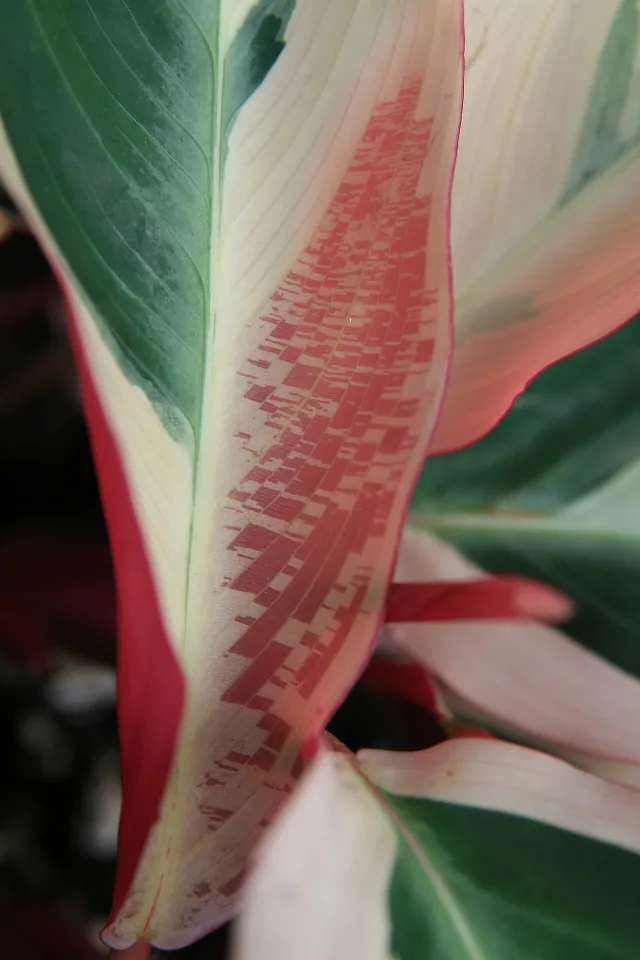
Photo : Photo by David J. Stang — CC BY-SA 4.0 — source

🌱 Growing conditions
☀️ Light
Medium to bright indirect light; no intense direct sun.
💧 Watering
Keep lightly moist, allowing only the surface to dry.
🌡️ Temperature
18–27 °C.
💦 Humidity
High, ideally 60 % or more, with gentle airflow.
🪴 Potting mix
Humus-rich, light and airy, moisture-retentive but not compact.
⭐ Difficulty
Demanding
🌱 Growth
Moderate
📏 Mature size
About 60–100 cm.
🌿 Habit
Clumping
📝 About Stromanthe Triostar
Description
Stromanthe thalia 'Triostar' is a spectacular member of the Marantaceae with long leaves irregularly variegated in green, cream and pink and a purple underside. It is also sold under names such as 'Tricolor' or 'Tristar'.
It appreciates fairly bright indirect light to preserve its colors, but cream and pink sectors scorch quickly in direct sun. It also reacts to abrupt changes in moisture and to air that is too dry.
Like other prayer-plant relatives, the leaves change angle through the day. A stable environment matters more than very frequent watering.
Care
Keep the potting mix lightly moist without saturating it. If your tap water is very hard, prefer filtered or low-mineral water. Maintain high atmospheric humidity but avoid a confined environment. Keep the plant away from radiators and drafts.
Repotting
Repot when the clump fills the pot or the potting mix has become compacted. Use a humus-rich mix amended with perlite and, if useful, fine bark.
Propagation
Divide the rhizomes during repotting. Each section must retain several shoots and enough roots.
🐱 Toxicity
Generally regarded as non-toxic to dogs and cats.
🩺 Common problems
Yellow leaves
Excess water, cold or poor drainage. An old outer leaf may yellow naturally.
Brown leaves
Dry air, hard water, direct sun and irregular watering are the most common causes; the pale sectors show damage first.
Diseases
Root rot and leaf spots when moisture stagnates and air circulation is poor.
Pests
Spider mites are particularly common in dry air, but thrips and scale insects can also occur.