Plant profile
Stromanthe
Stromanthe thalia
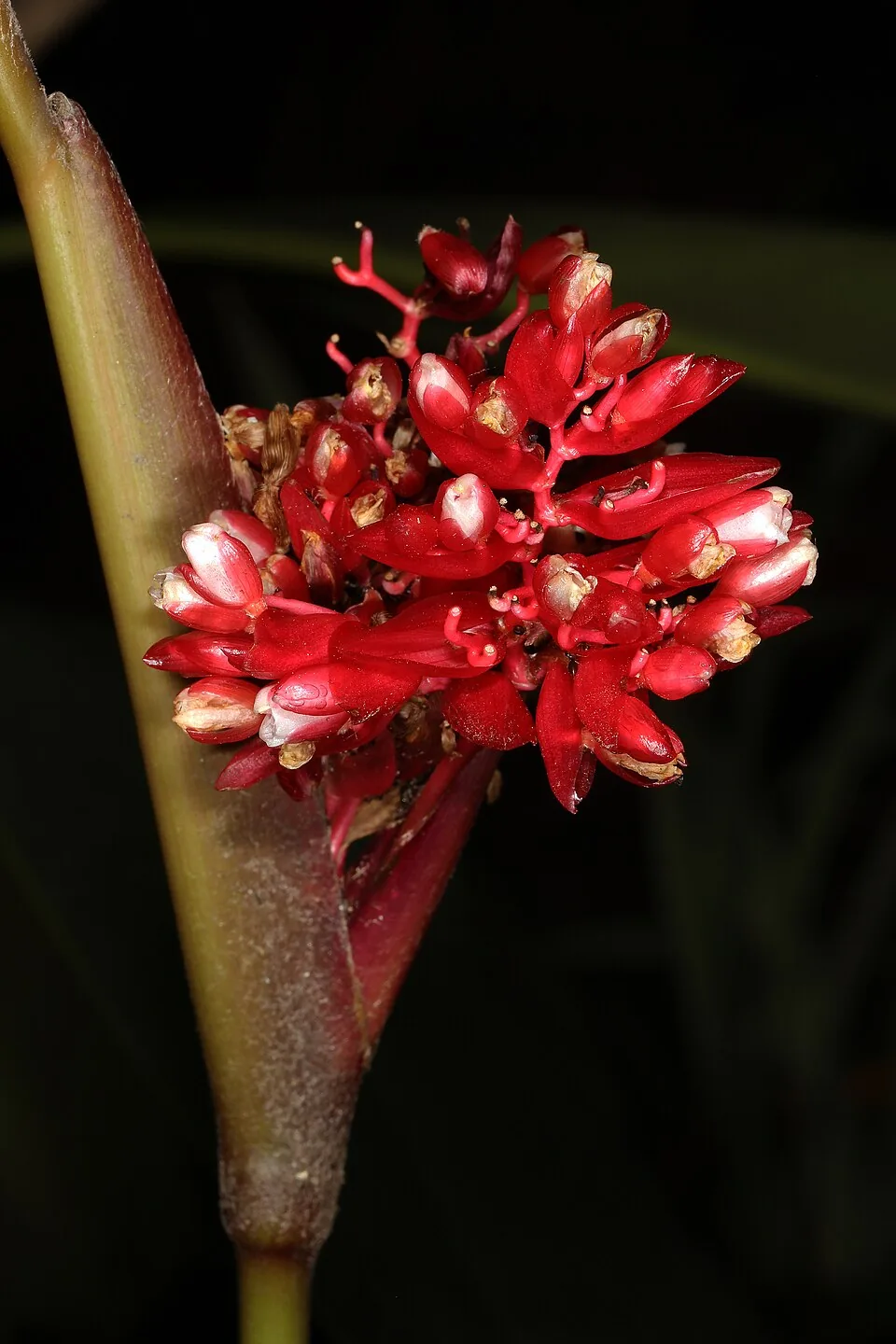
Photo : SAplants — CC BY-SA 4.0 — source

🌱 Growing conditions
☀️ Light
Medium to bright light, always indirect.
💧 Watering
Keep the potting mix slightly moist without waterlogging; low-mineral water is preferable.
🌡️ Temperature
18 to 27 °C
💦 Humidity
High
🪴 Potting mix
Humus-rich, loose and well-draining.
⭐ Difficulty
Moderate to demanding
🌱 Growth
Moderate
📏 Mature size
60 to 120 cm
🌿 Habit
clumping
📝 About Stromanthe
Description
Stromanthe thalia forms a clump of long lance-shaped leaves on slender petioles, often with burgundy to purple undersides. The leaves rise and lower slightly through the day-night cycle. Like other prayer plants, it shows water or mineral stress quickly through brown tips and dry margins.
Care
Medium to bright light, always indirect. Keep the potting mix slightly moist without waterlogging; low-mineral water is preferable. Above all, avoid abrupt changes in conditions and check the root ball before watering again.
If the margins brown despite correct soil moisture, try lower-mineral water and move the plant away from heating drafts before increasing watering further.
Repotting
Repot when roots truly fill the container or the mix has degraded. Choose a pot with drainage holes only slightly larger and use a humus-rich, loose, well-draining mix. An unnecessarily large pot keeps moisture around the roots for longer.
Choose a pot only a little wider than the clump and keep the rhizomes at their previous depth; a large volume of wet compost unnecessarily slows drying.
Propagation
Propagate Stromanthe thalia by division when repotting, following the natural sections of the rhizome. Each division should retain several leaves or shoots and a good bundle of active roots.
Avoid very small divisions, which recover slowly. An isolated leaf cannot regenerate the plant.
🐱 Toxicity
Marantaceae in this group are generally considered non-toxic to dogs and cats. Ingesting large amounts of plant material is nevertheless discouraged.
🩺 Common problems
Yellow leaves
In Stromanthe thalia, generalized yellowing may come from excess water, a cold shock or stressed roots. One old leaf turning yellow is not necessarily worrying.
Brown leaves
Brown tips on Stromanthe thalia are often linked to overly dry air, irregular watering or highly mineralized water. Dry marks facing the window may also indicate too much direct sun.
Diseases
Stromanthe thalia can suffer root rot if the mix stays waterlogged. Leaf spots may also progress when foliage remains wet without air circulation.
Pests
Spider mites deserve particular attention on Stromanthe thalia, especially in dry air. Look for fine stippling, dull foliage or small webs; scale insects are also possible.