Plant profile
Japanese aralia
Fatsia japonica
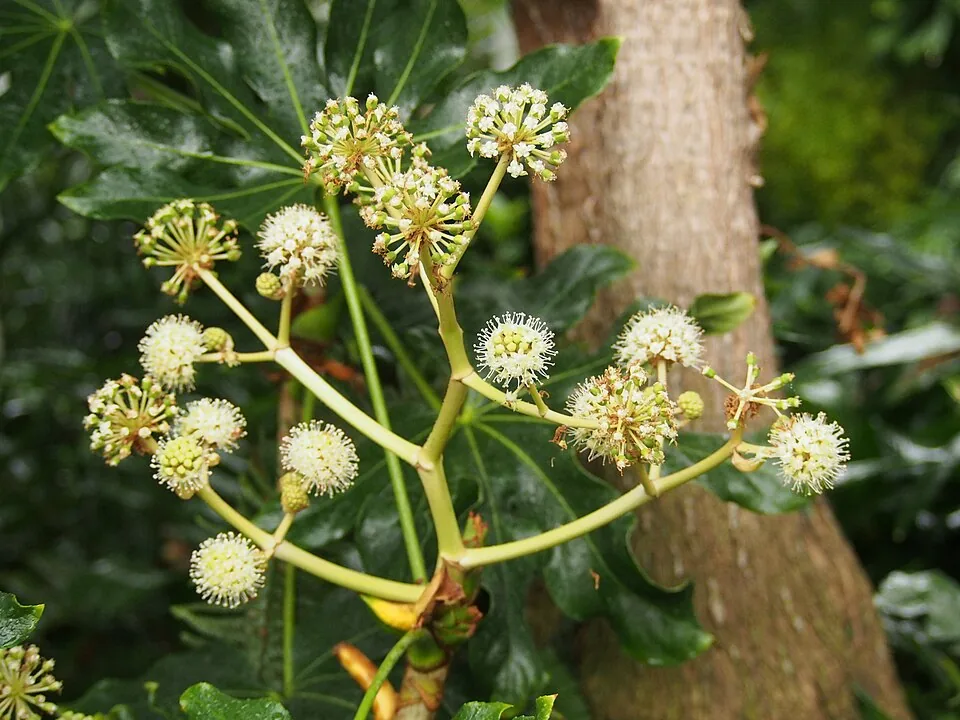
Photo : Agnieszka Kwiecień, Nova — CC BY-SA 4.0 — source

🌱 Growing conditions
☀️ Light
Medium to bright indirect light. It tolerates moderate light and often prefers a fairly cool room; avoid hot afternoon sun.
💧 Watering
Water when the top 2–4 cm dry. Keep the root zone slightly moist during active growth, then reduce watering in winter.
🌡️ Temperature
10 to 21 °C
💦 Humidity
Medium
🪴 Potting mix
Rich and well-draining
⭐ Difficulty
Easy
🌱 Growth
Fast
📏 Mature size
1 to 2 m indoors
🌿 Habit
shrubby
📝 About Japanese aralia
Description
Evergreen Japanese shrub with large glossy palmate leaves. It generally prefers cooler conditions than many tropical houseplants.
Care
Remove old leaves at the base and cut back overly tall stems in spring if needed. It handles a cool interior better than constant dry heat.
Repotting
Repot in spring when needed using fertile, well-draining mix. Large specimens can later be top-dressed instead of repotted every year.
Propagation
Semi-ripe stem cuttings or seed; take cuttings in spring or summer.
🐱 Toxicity
Of low concern in household use; nevertheless avoid ingestion.
🩺 Common problems
Yellow leaves
Often caused by excess water or poor drainage; cold can also stress the plant.
Brown leaves
Dry edges usually mean dry heat, lack of water or strong sun. Soft brown spots suggest excess water, damp cold or poor air movement.
Diseases
Root rot in waterlogged soil; leaf spots may occur.
Pests
Watch for spider mites, scale insects and aphids. Inspect the undersides of the large leaves, petioles and young shoots. Sticky honeydew or brown scales suggest scale insects, distortion suggests aphids, and fine stippling suggests spider mites.