Plant profile
Medallion Prayer Plant
Goeppertia roseopicta 'Medallion'
🌱 Growing conditions
☀️ Light
Medium to bright filtered indirect light; never harsh direct sun.
💧 Watering
Keep the mix lightly moist without saturation; water when the surface just begins to dry.
🌡️ Temperature
18–27 °C; avoid below 16 °C and cold draughts.
💦 Humidity
Preferably high, with good air movement.
🪴 Potting mix
Rich, loose and free-draining, able to retain some moisture without compacting.
⭐ Difficulty
Moderate
🌱 Growth
Moderate
📏 Mature size
40–60 cm indoors
🌿 Habit
bushy, broad and rounded
📝 About Medallion Prayer Plant
Description
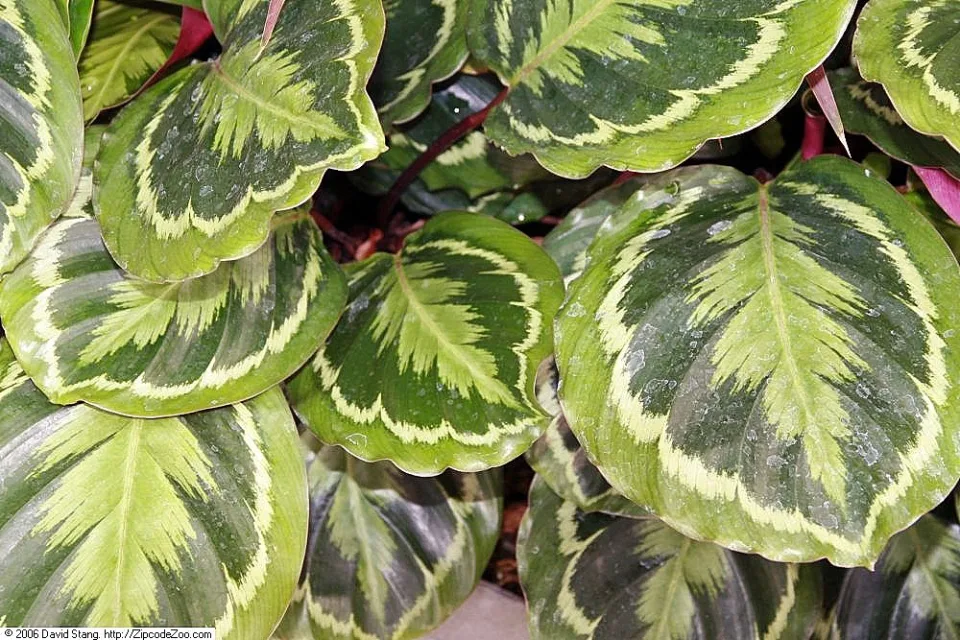
Very recognisable cultivar with large nearly round leaves marked by concentric pale-green and cream patterns on dark green, with purple undersides.
Like other prayer plants, leaves change orientation between day and night. This movement is normal and should not be mistaken for wilting.
The foliage is particularly sensitive to highly mineralised water, long periods of dry air and direct sun. Good culture relies more on consistency than on heavy watering.
Care
Place in filtered light away from direct sun and radiators. Keep the mix lightly moist but never saturated; if tap water is very hard, use lower-mineral water when possible.
High humidity limits crisp edges, but avoid keeping leaves constantly wet. Feed very lightly during growth and occasionally flush the mix to limit salts.
Repotting
Repot when the clump fills the pot or the mix becomes compact. A container only slightly larger, often wider than deep, suits the rhizomatous system.
Use a loose mix that retains some moisture while allowing air through. Do not compress heavily around the rhizomes.
Propagation
Reliable propagation is by division during repotting. Separate a section of clump with several shoots and its own roots.
Individual leaves or petioles do not make a new plant. Avoid dividing a weak small clump; each section needs enough roots to recover.
🐱 Toxicity
Generally considered non-toxic to dogs and cats.
🩺 Common problems
Yellow leaves
Yellow leaves with constantly wet mix usually indicate overwatering or poor drainage. Let the surface dry slightly and inspect roots if yellowing progresses.
One old outer leaf may yellow naturally. A very pale inactive plant may also need more light.
Brown leaves
Brown tips and edges are common with hard water, salt buildup, dry air or irregular watering. Use lower-mineral water if needed and keep soil moisture more even.
Bleached then brown patches on the window-facing side indicate excessive direct sun.
Diseases
Root rot occurs mainly when the mix stays saturated and cool. Remove soft brown roots and repot if necessary.
Leaf spots are encouraged by foliage staying wet for long periods in stagnant air; water the mix rather than the leaves.
Pests
Spider mites and thrips are the most troublesome pests. Mites cause fine stippling and sometimes tiny webs; thrips leave silvered areas and may distort new leaves.
Inspect leaf undersides and the centre of the clump regularly, especially in dry air.