Plant profile
Jungle Velvet calathea
Goeppertia warszewiczii
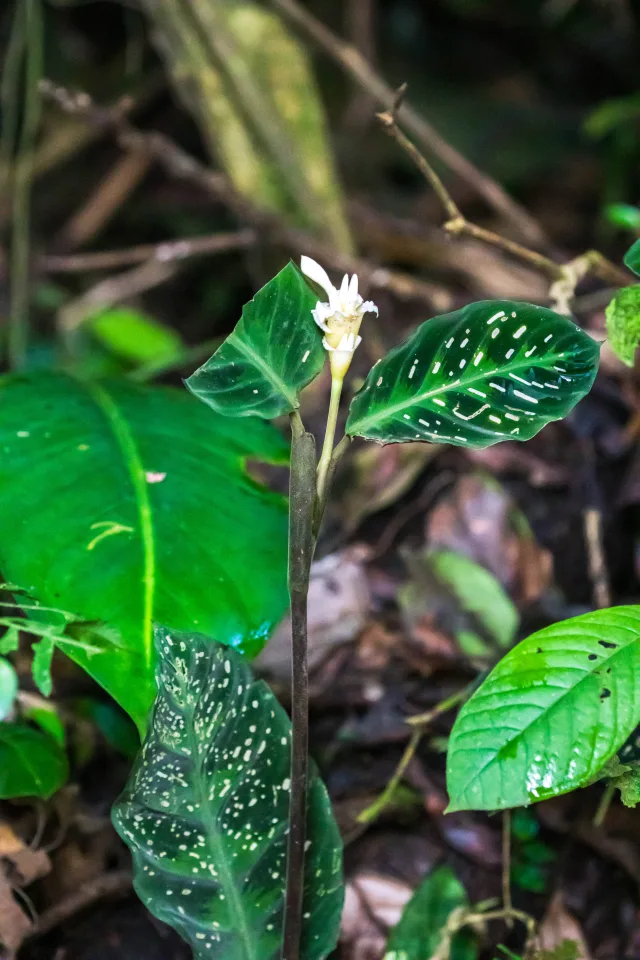
Photo : cricketsblog — CC BY 2.0 — source

🌱 Growing conditions
☀️ Light
Medium to bright indirect light; never harsh sun.
💧 Watering
Keep the mix lightly moist, preferably using low-mineral water. Let only the surface dry slightly.
🌡️ Temperature
18 to 27 °C.
💦 Humidity
High, ideally 60% or more.
🪴 Potting mix
Humus-rich, soft, slightly acidic and free-draining.
⭐ Difficulty
Moderate to difficult
🌱 Growth
Moderate
📏 Mature size
60 to 100 cm
🌿 Habit
upright clump
📝 About Jungle Velvet calathea
Description
Goeppertia warszewiczii, often sold under the older name Calathea warscewiczii, has large velvety dark-green leaves marked with lighter patterns. Their undersides are purple and become especially visible when the leaves rise in the evening.
It is spectacular but sensitive to dry air, hard water and excess fertiliser. Stable conditions matter more than constant intervention.
Care
Keep it away from radiators and direct sun. Water with soft water when the surface starts to dry, keeping the mix lightly fresh.
Wipe leaves with a soft cloth rather than misting them constantly. Feed weakly in spring and summer and occasionally flush the mix to reduce salt build-up.
Repotting
Repot in spring when rhizomes and roots fill the pot. Use a humus-rich airy mix and a container with drainage holes.
Propagation
Divide the clump during repotting. Each section should retain several shoots and a healthy piece of rhizome.
🐱 Toxicity
Goeppertia, commonly sold as Calathea, are generally considered non-toxic to cats and dogs.
🩺 Common problems
Yellow leaves
Overwatering, cold or suffocated roots. A single old lower leaf may yellow naturally.
Brown leaves
Very often caused by dry air, hard water, excess fertiliser or irregular watering. Crispy edges are typical of low humidity.
Diseases
Root rot if the mix remains saturated; leaf spots if foliage stays wet for long periods.
Pests
Watch especially for spider mites in dry air, along with scale insects. Check leaf undersides and petioles regularly; isolate the plant if fine stippling, webbing or scale appears.