Plant profile
False aralia
Plerandra elegantissima
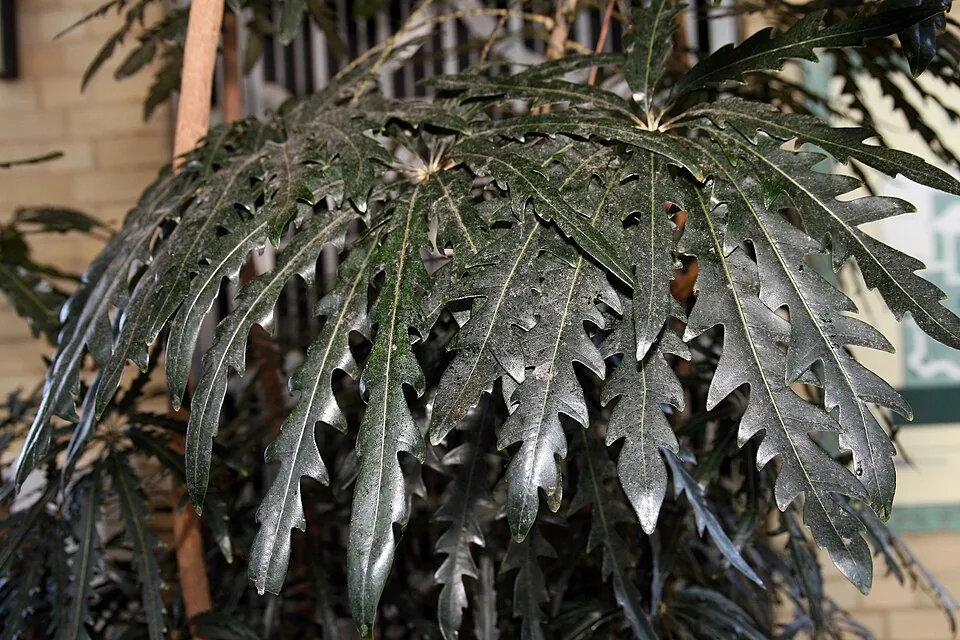
Photo : Photo by David J. Stang — CC BY-SA 4.0 — source

🌱 Growing conditions
☀️ Light
Bright indirect light; protect from scorching sun.
💧 Watering
Water when the first few centimeters of potting mix begin to dry, without leaving standing water.
🌡️ Temperature
18 to 27 °C
💦 Humidity
Medium to high
🪴 Potting mix
Rich, airy and well-draining.
⭐ Difficulty
Moderate
🌱 Growth
Moderate to fast
📏 Mature size
1.5 to 2.5 m indoors
🌿 Habit
shrubby and upright
📝 About False aralia
Description
Plerandra elegantissima, the false aralia, has palmately compound juvenile leaves made of very narrow, toothed, dark leaflets that are often coppery when emerging. Adult foliage becomes broader and looks markedly different. This change explains why an old specimen can look very different from a young potted plant.
Care
Bright indirect light; protect from scorching sun. Water when the first few centimeters of potting mix begin to dry, without leaving standing water. Above all, avoid abrupt changes in conditions and check the root ball before watering again.
Avoid abrupt changes around Plerandra elegantissima; it can quickly shed leaflets after a cold draught, suddenly dry air or relocation.
Repotting
Repot when roots truly fill the container or the potting mix has degraded. Choose a pot with drainage holes only slightly larger and use a rich, airy, well-draining mix. An unnecessarily large pot retains moisture around the roots for longer.
Its tall outline requires a stable pot, but do not compensate with a huge volume of compost; increase the diameter only slightly and use a sufficiently heavy container.
Propagation
Stem or shoot cuttings, using a method suited to how woody the shoots are.
Semi-ripe stem cuttings are slow to root; keep several nodes, bottom warmth and high air humidity without waterlogging the rooting medium.
🐱 Toxicity
Avoid ingestion by children and pets; toxicity and irritant properties vary within the botanical group.
🩺 Common problems
Yellow leaves
If several leaves of Plerandra elegantissima yellow together, first check potting-mix moisture, then light and temperature. A single old leaf may simply be reaching the end of its cycle.
Brown leaves
On Plerandra elegantissima, distinguish a dry tip from a soft area: the first often accompanies drying or overly strong sun, while the second points more toward excess moisture.
Diseases
Root problems in Plerandra elegantissima become more likely in constantly wet, poorly aerated potting mix. Rapid loss of vigor or a soft base justifies checking the roots.
Pests
Inspect leaf undersides, nodes and young shoots of Plerandra elegantissima. If you see stippling, distortion, cottony masses or visible insects, isolate the plant before treating.